D'Arcy McGee Quotes
There is room enough in this country for one great free people; but there's not room enough, under the same flag and the same laws, for two or three angry, suspicious, obstructive "nationalities.
D'Arcy McGee, 1825-1868, Irish National and member of Canadian Parliament (Liberal), Speech, Quebec City, 1862
Sourced by: Eigen's Political and Historical Quotations

Before the French Revolution, Jews could freely practice their own religion in France but they could not hold citizenship, become professionals, or a host of other privileges of citizenship. Clermont-Tonnerre and other liberals argued that Jews should be given citizenship. The Jacobins--conservative Catholics close to the Papacy--opposed granting citizenship to Jews or Protestants. One argument that the Jacobins gave was that each of these sects would be separate nations within France and not necessarily have French national interest as a priority. Clermont-Tonnerre gave this response which has been the French philosophy about minority citizenship since then. Their thought was that anyone may become a French citizen as an individual but he or she should do so because he/she wants to accept French values and support the French nation. This view worked quite will over the years until the large immigration of Muslims starting in the 1960s where many new immigrants just wanted to live in France and earn a living there, but did not want to identify with French national aspirations or adopt French culture or values. America, had no such demands and those immigrants who tended to identify primarily with their country or culture of origin and not assimilate were allowed to do so, but the American way of life was so attractive that many immigrants did adopt it and even if they did not, their children almost inevitably did. That has not happened in France.


Similar formal opposition to Jewish parochial schools was more formally voiced later—see American Council for Judaism.


Penn observed the fact that most American social relationships are not multicultural in that Blacks in a restaurant tend to eat with other Blacks, whites and Hispanics the same. While America has a multicultural and diverse work environment and use of public services, it is still rare to see very integrated churches, social clubs, parties and other social activities. While Penn’s observation is correct, the trend is towards much more socialization on racial, religious, cultural, and geographical basis. There is much more intermarriage than in the past and with integrated families, many of the other social pluralism will follow. It was once thought that intermarriage would be the last barrier to fall and would follow from school, church, and other social integration. However, it appears that it is the other way around.


At the time racism and discrimination in the United States was not only rampant but legal. But change in many substrata of America was detectable and many intellectuals--writers, artists, scientists, educators, theologians, entertainers, groups who would later be called “elites” began to make themselves heard on the subject. Falkner was one whose novels had always taken an anti racist view point and now were overtly calling for political and social change.


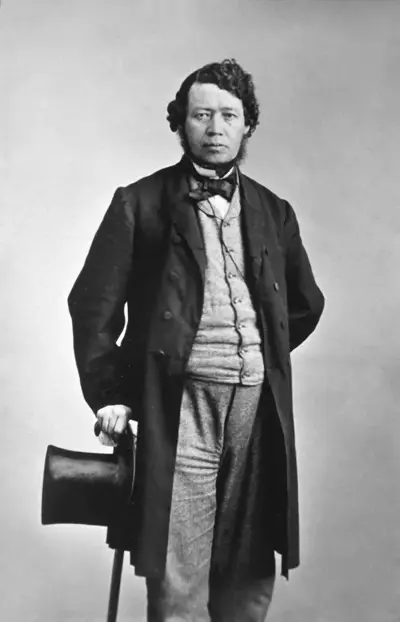
Thomas D'Arcy Etienne Grace Hughes McGee was an Irish-Canadian politician, Catholic spokesman, journalist, poet, and a Father of Canadian Confederation. The young McGee was a Catholic Irishman who opposed British rule of Ireland, and worked for a peasant revolution to overthrow British rule and secure Irish independence. He escaped arrest and fled to the United States in 1848, where he reversed his political beliefs. He became disgusted with American republicanism and democracy, and became intensely conservative in his politics and in his religious support for the Pope. He moved to Canada in 1857 and worked hard to convince the Irish Catholics to cooperate with the Protestant British (members of the church) in forming a Confederation that would make for a strong Canada in close alliance with Britain. His passion for Confederation garnered him the title: 'Canada's first nationalist'. He fought the Fenians in Canada, who were Irish Catholics that opposed the British and resembled his younger self politically. McGee succeeded in helping create the Canadian Confederation in 1867, but was thought to have been assassinated by Patrick J. Whelan in 1868.
