Benjamin Rush Quotes
'Tis done. We have become a nation.
Rush, Benjamin. Letter to Elias Boudinot. 9 July 1788. Letters of Benjamin Rush, edited by L.H. Butterfield, vol. 1, Princeton University Press, 1951, p. 475.


He persuaded many other rulers to join the Indian Union when India became Independent.


Advising his countrymen how to treat the minority French Canadians:


The palace, which had belonged to the Ottoman Caliphs, who were called “Shadows of Allah on Earth”.

France had been hit with repeated riots of Muslim and African French citizens and immigrants. Thousands of cars were burned, property damaged and violence of the protesters had injured and killed bystanders. The major complaint was that they were not really accepted as equals in French society. Chirac tried to calm the rioters and prevent a backlash. Although France was a pioneering country in acceptance and tolerance of people of different races and religions, there has always been a strong intolerant segment of French Society that were racist, anti-Semitic and Fascist leaning. Because of the French concept of equality, affirmative action was not legally possible in France so that there was heavy discrimination and even segregation in housing, schools, occupations, and socially. Further, one of the traditional expectations of all immigrants who become French is that they adopt the French language and culture. Like immigrants throughout the world at the end of the 20th century, French immigrants often wanted to maintain their own customs, culture and language—a practice which set them at odds even with otherwise nondiscriminatory Frenchmen and women.


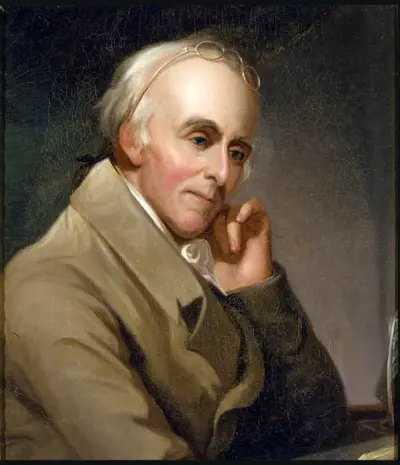
Benjamin Rush was a signer of the United States Declaration of Independence and a civic leader in Philadelphia, where he was a physician, politician, social reformer, humanitarian, and educator and the founder of Dickinson College. Rush attended the Continental Congress. His later self-description there was: "He aimed right." He served as Surgeon General of the Continental Army and became a professor of chemistry, medical theory, and clinical practice at the University of Pennsylvania.
