William Shakespeare Quotes
Thou slave, thou wretch, thou coward!
Thou little valiant, great in villainy!
Thou ever strong upon the stronger side!
Thou Fortune's champion, that dost never fight
But where her humorous ladyship is by
To teach thee safety.
Shakespeare, William. King John. Edited by Barbara A. Mowat and Paul Werstine, Simon & Schuster, 2000, p. 101.


Hillary Rodham (not yet married to Bill Clinton, at the time a student at Yale Law School) shouted this at Joe Califano as he walked down the aisle of the Senate Caucus Room, representing Paul Austin, chairman and CEO of Coca-Cola in a hearing on migrant labor problems on July 24, 1970. Coca-Cola had acquired Minute Maid in 1960, and as a result became involved in the issue because of their exploitation of migrant workers in Florida. Mondale, chairman of the Subcommittee on Migratory Labor of the Senate Subcommittee on Labor and Public Welfare, was conducting the hearing. He ended up praising Austin in the hearing as Austin agreed to support amending the National Labor Relations act to cover migrant workers and permit them to organize.

Some scholars believe that it was Henry Cabot Lodge to whom he made this remark.

Armstrong rarely commented on politics (see {615854}), but the Governor defying the Supreme Court and not letting his people even go to school with other students was too much for him. He not only made the statement, but he approved it for publication. This shocked many who knew him as an apolitical person. He was particularly distressed with President Eisenhower who although he had warned Faubus that he would enforce the court order and then used federal troops to do so, Eisenhower was a man of action and not rhetoric and his lack of firm public statements overlooked an opportunity to use the Presidential “bully pulpit” and exercise his moral leadership and authority. Many then, and even 50 years later, were not sure where he stood on the issue of school desegregation.

Paine had been imprisoned in France for his political writings. After inspiring the nation in the Revolution, he was not a very popular figure in America, being regarded as an atheistic, rabble-rouser. The President distanced himself from the situation and did nothing to secure Payne's release.

In 1956, Democratic presidential candidate, Adlai Stevenson, had suggested a nuclear testing ban. The then Vice President made his extreme accusation. See {619523} for another Nixon smear of Stevenson.

The event that triggered the call was President Lyndon Johnson introducing the Voting Right Act. Russell had been a mentor to the young Johnson, a fellow Southerner who had voted against and blocked all civil rights legislation when he was in the House and Senate. However when he became President, his representation changed and he reverted to his pre-political views. {637651}


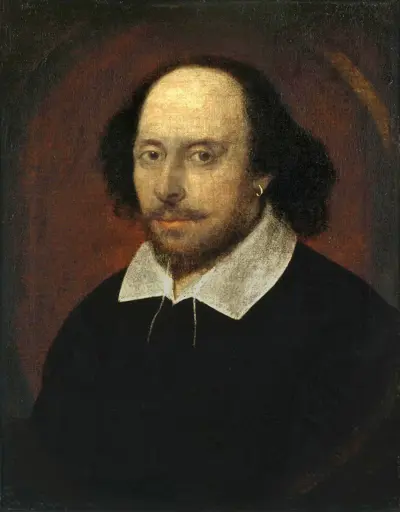
William Shakespeare was an English playwright, poet, and actor, widely regarded as the greatest writer in the English language and the world's greatest dramatist. He is often called England's national poet and the "Bard of Avon" (or simply "the Bard"). His extant works, including collaborations, consist of some 39 plays, 154 sonnets, three long narrative poems, and a few other verses, some of uncertain authorship. His plays have been translated into every major living language and are performed more often than those of any other playwright. They also continue to be studied and reinterpreted.
