William Shakespeare Quotes
Grace me no grace, nor uncle me no uncle;
I am no traitor's uncle, and that word "grace"
In an ungracious mouth is but profane.
Shakespeare, William. Richard II. Edited by Barbara A. Mowat and Paul Werstine, Simon & Schuster, 1999, p. 81.


Adultery for a queen was considered treason. Adultery per se was not punished with death in 16th century England, but the concept was that a Queen who committed adultery was risking the royal bloodline and therefore the Crown and the Nation.


Before the 1968 election, President Johnson, and gotten the North Vietnam Communists to agree to Peace Talks with the U. S. and South Vietnam. Then Candidate Nixon thought that if the peace talks were ongoing and making progress, there would be more support for the Democrats and Nixon's opponent Hubert Humphrey. So Nixon secretly send a secret emissary to South Vietnamese President Nguyen Van Thieu telling him that he would not get a very good deal because President Nixon claimed that President Johnson was too eager to end the Vietnam war. He suggested that if Thieu boycotted the peace talks, then when Nixon was elected, he would guarantee a much better deal for South Vietnam and Thieu personally. President Thieu boycotted the peace talks and there could be no progress. However there is a Federal Law, the Logan Act, that makes it a felony for a private American citizen to conduct or interfere with foreign policy or negotiations with a foreign government. President Johnson found out about Nixon—s sabotage of the Peace Talks, called Nixon and threatened him with prosecution if he interfered further. LBJ had decided that with the left wing at odds with the U. S. Government over the Vietnam War, a prosecution of Nixon would cause the Right Wing to challenge the government also and the country didn—t need further polarization. He would do that only if Nixon did not heed the President—s warning. But when Nixon won the election and became President, he was terribly anxious that his pre-election crimes would be made public, and spent much of his time and staff effort trying to find out who knew about his politically self-serving felony and who might make his crime public. See {583264}.

In 1904 President Theodore Roosevelt instructed his Attorney General to file one of America’s first and the largest anti-trust case against Northern Securities Company. The President was a Republican and a patrician. Most of his social acquaintances and a few friends were totally surprised that the President could turn against his own class in what they saw as an act of class warfare. They sought explanations for the unthinkable.


Paine had been imprisoned in France for his political writings. After inspiring the nation in the Revolution, he was not a very popular figure in America, being regarded as an atheistic, rabble-rouser. The President distanced himself from the situation and did nothing to secure Payne's release.
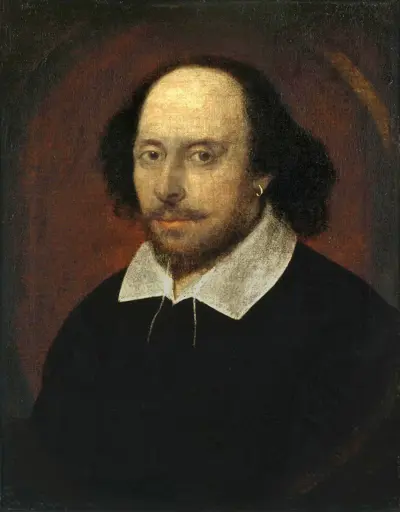
William Shakespeare was an English playwright, poet, and actor, widely regarded as the greatest writer in the English language and the world's greatest dramatist. He is often called England's national poet and the "Bard of Avon" (or simply "the Bard"). His extant works, including collaborations, consist of some 39 plays, 154 sonnets, three long narrative poems, and a few other verses, some of uncertain authorship. His plays have been translated into every major living language and are performed more often than those of any other playwright. They also continue to be studied and reinterpreted.
