Thomas Paine Quotes
As to you, sir, treacherous in private friendship and … a hypocrite in public life, the world will be puzzled to decide whether you are an apostate or an imposter, whether you have abandoned good principles, or whether you ever had any.
Paine had been imprisoned in France for his political writings. After inspiring the nation in the Revolution, he was not a very popular figure in America, being regarded as an atheistic, rabble-rouser. The President distanced himself from the situation and did nothing to secure Payne's release.
Thomas Paine, 1737-1809, British American Political Philosopher, Letter to George Washington, July 30, 1796
Sourced by: Eigen's Political and Historical Quotations


The event that triggered the call was President Lyndon Johnson introducing the Voting Right Act. Russell had been a mentor to the young Johnson, a fellow Southerner who had voted against and blocked all civil rights legislation when he was in the House and Senate. However when he became President, his representation changed and he reverted to his pre-political views. {637651}


Commenting on the presidential nomination of James K. Polk:


He was one of the Black intellectuals who criticized the white’s favorite Negro Leader, Booker T. Washington who concentrated his efforts on Black education and self-improvement to make Blacks more acceptable to whites. Trotter was the first man of color to earn a Phi Beta Kappa key from Harvard University. He was an outspoken critic of President Woodrow Wilson’s policy that for the first time instituted official segregation of Federal Employment and his firing of all Blacks then in executive or white collar positions in the Federal Government. Wilson, for all his supposed modernity, was one of the most racist of all American Presidents. Washington thought that segregation was so entrenched that it would take many generations to eliminate it, and therefore felt that the best thing to do was to improve the positions of Blacks within the segregationist structure. Both sides were right from different perspectives although Trotter, Dubois and their followers did much more to confront and eventually change racist America.


The Chief was contrasting the Cherokee behavior with that if the U. S. Government agents dealing with the Indians who were very eloquent about their friendship with Indians who they had never met before and mad many motives but personal friendship was rarely one.


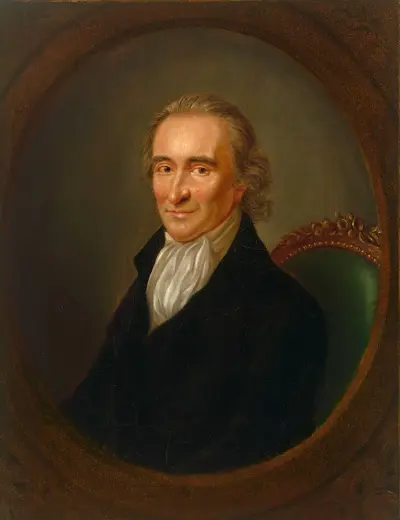
Thomas Paine was an English-born American political activist, philosopher, political theorist, and revolutionary. He authored Common Sense (1776) and The American Crisis (1776–1783), the two most influential pamphlets at the start of the American Revolution, and helped inspire the patriots in 1776 to declare independence from Great Britain. His ideas reflected Enlightenment-era ideals of transnational human rights. Historian Saul K. Padover described him as "a corsetmaker by trade, a journalist by profession, and a propagandist by inclination".
