William Monroe Trotter Quotes
the great compromiser the traitor within
He was one of the Black intellectuals who criticized the white’s favorite Negro Leader, Booker T. Washington who concentrated his efforts on Black education and self-improvement to make Blacks more acceptable to whites. Trotter was the first man of color to earn a Phi Beta Kappa key from Harvard University. He was an outspoken critic of President Woodrow Wilson’s policy that for the first time instituted official segregation of Federal Employment and his firing of all Blacks then in executive or white collar positions in the Federal Government. Wilson, for all his supposed modernity, was one of the most racist of all American Presidents. Washington thought that segregation was so entrenched that it would take many generations to eliminate it, and therefore felt that the best thing to do was to improve the positions of Blacks within the segregationist structure. Both sides were right from different perspectives although Trotter, Dubois and their followers did much more to confront and eventually change racist America.
William Monroe Trotter, 1872–1934, Black Civil Rights Advocate, Editor & Founder of The African American Newspaper, The Boston Guardian, Co-Founder with W. E. B. Dubois of the Niagara Movement, One of the founders of the NAACP, Derogatory Insults for Negro Leader Booker T. Washington, Quoted in The Washington Post, December 21, 2014
Sourced by: Eigen's Political and Historical Quotations

President Clinton had engaged in sex with an intern in the Oval Office and lied about it in investigations. Clinton had been an embarrassment anathema to the Republicans by producing a remarkably strong economy without cutting taxes, reducing government deficits, cutting the size of government, winning the Serbian war without a single American soldier dying, and preempting many of their programs. So the Republicans who controlled both Houses of Congress decided to impeach Clinton for the lies. Wexler argued that there was no damage done to the nation and the sex and lying did not rise to the required level of an impeachable offense. On a party line vote, Clinton was impeached, but the Republicans could not even get the majority of the Senate which they controlled. Most senators agreed with Wexler. See {583801} for a later summary of the absurdity of impeaching Clinton who left office as one of the most popular presidents in modern times.

He was soon thereafter murdered.


Hillary Rodham (not yet married to Bill Clinton, at the time a student at Yale Law School) shouted this at Joe Califano as he walked down the aisle of the Senate Caucus Room, representing Paul Austin, chairman and CEO of Coca-Cola in a hearing on migrant labor problems on July 24, 1970. Coca-Cola had acquired Minute Maid in 1960, and as a result became involved in the issue because of their exploitation of migrant workers in Florida. Mondale, chairman of the Subcommittee on Migratory Labor of the Senate Subcommittee on Labor and Public Welfare, was conducting the hearing. He ended up praising Austin in the hearing as Austin agreed to support amending the National Labor Relations act to cover migrant workers and permit them to organize.

Treason has often been committed by those must trusted in a nation.

Clay came from the western part of Kentucky—then the "western" part of the United States.

Paine had been imprisoned in France for his political writings. After inspiring the nation in the Revolution, he was not a very popular figure in America, being regarded as an atheistic, rabble-rouser. The President distanced himself from the situation and did nothing to secure Payne's release.

Arnold was not just any senior officer, but one who had been a great fighter against the British not only, leading his men brilliantly but exposed himself to great danger in the process. He had been such a hero that Washington could not imagine how an officer like that could become a traitor to the cause. Arnold’s treasom had nothing to do with ideology or the issues of the war. Arnold felt that he had not been appreciated for his efforts (his commanding officer gave him no credit for the most heroic and effective military battlefield leadership up to that point in the war) and became disaffected.
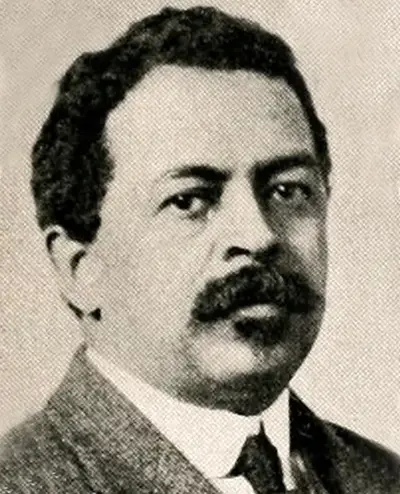
William Monroe Trotter, sometimes just Monroe Trotter, was a newspaper editor and real estate businessman based in Boston, Massachusetts, and an activist for African-American civil rights. He was an early opponent of the accommodationist race policies of Booker T. Washington, and in 1901 founded the Boston Guardian, an independent African-American newspaper he used to express that opposition. Active in protest movements for civil rights throughout the 1900s and 1910s, he also revealed some of the differences within the African-American community. He contributed to the formation of the National Association for the Advancement of Colored People (NAACP).
