Leoline Jenkins Quotes
[They] are most Scotch and Scotch breed and are the Northern Presbyterians and phanatiques, lusty, able bodied, hardy and stout men, where one may see three or four hundred at every meeting-house on Sunday, and all the North of Ireland is inhabited by these, which is the popular place of all Ireland by far. They are very numerous and greedy after land.
Many of these people came to the American Colonies in search of land and opportunity.
Leoline Jenkins, 1623-1685, English Secretary of State, Description of Scotch Immigrants to Ireland to the Duke of Ormond, 1679
Sourced by: Eigen's Political and Historical Quotations

This early Irish emigration—mostly to America—were mostly Ulster Presbyterians known in America as “Scotch-Irish”. The editors were very concerned as the emigrants were the backbone of the Ulster workforce. The huge Catholic emigration would come later.

Ireland was then under English Control but the majority of the population were Roman Catholic. The Protestants wanted to bring more “balance” to the country. They were so anxious to dilute the Catholic population that they considered Jews as Protestants for this purpose and many of them immigrating to Dublin created the foundation of the Irish Jewish population in modern Ireland.


The highest court in New York. At the time only U. S. citizens could own land. Since the majority of the population were farmers, this was a critical limitation with a major inducement to citizenship. Today, that motivation is no more, and critics of our immigration policy are concerned that there is no longer the desire and commitment to be American but just to make money from the American economy with a cultural and political allegiance elsewhere,
The Diggers were a religious-economic movement that even today would be considered very radical. They advocated the right of the poor to go onto public lands and farm them—thus the name “Diggers.” Beyond their opposition to the private ownership of land to the exclusion of the poor, Winstanley and the Diggers promulgated another very modern doctrine: That the poor should take the responsibility and have the right to determinine how the society should provide for the poor. A version of this became one of the Mottos of the Poverty Program of 1964. See {616966}.
Luttrell was interested in buying some Western land and moving to America. His advice regarding assistance to immigrants was never adopted by the Federal Government even though shortage of manpower was a critical problem for early America. There was so much public debt that Federal funds were too short for the purpose. Several of the States however did provide varying forms of assistance to immigrants. See {57719}.

The King was concerned that colonists to America were motivated by a desire to escape his authority. He was right.


He was the one who wrote the popularization of the Lost City of Atlantis

The railroads that opened up the West are often used as examples of American corporate and entrepreneurial achievement. But private enterprise would not risk the capital for such a visionary and innovative scheme. It was the Federal Government which provided loans to start and paid for every mile of track with huge grants of land along the right of way. Then the Federal government provided the security and conducted numerous wars against the Indians to make the construction and operation possible. Had the Government and President Lincoln not pushed and supported the plan, there would have been no transcontinental railroad.

Bourne was one of the first writers with a national audience to question the classic but never real “melting pot” theory of immigration and suggest the “salad” model though he never used the term. Also, the South was backward compared to the other states before the Civil War and the difference became greater after. The sensitivity of Southerners to their underdevelopment made comparisons such as these infrequent. The gap closed somewhat during the 20th century but comparisons which illustrate the relative inferiority of the South remain a sensitive subject,


Orangemen were the ulta Protestant Nationalists of Northern Ireland. Both Protetants and Catholics had their extremists who publicly spewed their hate, desire for exclusivity, and insults with little moderation from moderates who always risked retaliation from the extremists even of their own religion, not unlike the situation of the beginning of the 21st century, where Muslim moderates were cowed and intimidated by the religious Islamic extremists.

The Irish Earls of Ulster, after a failed rebellion against English rule, fled to the European continent. As Chichester realized, this created an opportunity for the King to name new Earls and grant them the lands and possessions of the Earls who had fled. And since the Irish people were loyal to their traditional Earls. He suggested that English and Scots colonists be recruited to settle the lands. The King agreed and referred to the project as the “Ulster Plantation”. This was the reason that Northern Ireland had a much larger Protestant population percentage than the rest of Ireland and wanted to remain part of England when Ireland obtained its independence.
This was just the beginning of the vast emigration from Ireland to America and elsewhere.

The members of the Ribbon Society were referred to as Ribbonists and they saw themselves as a counterweight to the Orange Order of the extremist Protestants. The Protestants were the “Hereticks”—this was the spelling of the time.

This ordinance opened the door somewhat to slavery again as Austin said it would “permit families to bring the necessary and indispensable house servants and laborers.” Earlier Mexican laws had abolished slavery in most of Mexico but left the door open in Texas. See {613642} and {613644}.


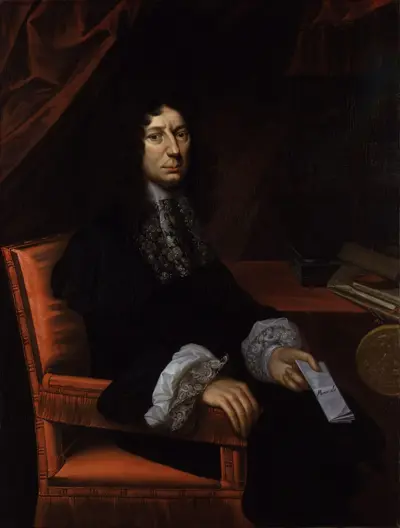
Sir Leoline Jenkins was a Welsh academic, diplomat involved in the negotiation of international treaties (e.g. Nimègue). jurist and politician. He was a clerical lawyer who served as Judge of the High Court of Admiralty from 1668 to 1685, and enjoyed a high reputation for judicial integrity. As a statesman he served as Secretary of State from 1680 to 1684.
