Randolph Bourne Quotes
Let the Anglo- Saxon ask himself where he would have been if these races had not come? Let those who feel the inferiority of the non- Anglo-Saxon immigrant contemplate that region of the States which has remained the most distinctively 'American,' the South. Let him ask himself whether he would really like to see the foreign hordes Americanized into such an Americanization. Let him ask himself how superior this native civilization is to the great 'alien' states of Wisconsin and Minnesota, where Scandinavians, Poles, and Germans have self- consciously labored to preserve their traditional culture, while being outwardly and satisfactorily American. Let him ask himself how much wis more wisdom, intelligence, industry and social leadership has come out of these alien states than out of all the truly American ones. The South, in fact, while this vast Northern development has gone on, still remains an English colony, stagnant and complacent, having progressed culturally scarcely beyond the early Victorian era. It is culturally sterile because it has had no advantage of cross-fertilization like the Northern states.
Bourne was one of the first writers with a national audience to question the classic but never real “melting pot” theory of immigration and suggest the “salad” model though he never used the term. Also, the South was backward compared to the other states before the Civil War and the difference became greater after. The sensitivity of Southerners to their underdevelopment made comparisons such as these infrequent. The gap closed somewhat during the 20th century but comparisons which illustrate the relative inferiority of the South remain a sensitive subject,
Randolph Bourne, 1886–1918, Social & Political Essayist, “Trans-National America”, The Atlantic Monthly, July 1916
Sourced by: Eigen's Political and Historical Quotations


See {635841} for a similar sentiment.


Most immigration reformers want to open immigration more widely. Ward wanted immigration restricted to certain ethnicities and limited. He wanted a uniformity of assimilation and not diversity.


She was referring to the Muslim immigrants who were then coming into Europe in large numbers. Europe in general, and Italy in particular, have never had the American experience of assimilation of large numbers of immigrants, and many Muslims came to Europe just for the economic opportunities but did not like or respect the culture or the values. Some even preached hatred of the Christian West and fomented terrorism. This was different from America where Muslim immigrants arrived and despite the difficulties of new immigrants most thrived and were able to assimilate yet maintain their religion and cultural customs. At the same time many American Islamic immigrants represented the more modern Islamic which valued freedom and pluralism and unlike most Muslim nations of today, appreciated the advanced, modernistic, tolerant Islam of 1000 years ago when tolerance and freedom of thought within an Islamic framework made some Muslim countries the most advanced in the world.

He and President George W. Bush appreciated the vakue and importance of immigration, but most other Republicans did not.

In revolutionary America, not only were the colonists divided into revolutionists and loyalists to Britain, but among the revolutionists, there was no uniformity of manners, ideas, norms, beliefs or any other element of politics and unity. The great challenge to America and one of its great strengths is its diversity which is not a consequence of recent immigration, but has been a characteristic of the American body politic even in the Revolutionary War. Even English was not spoken by everyone as there were French, German, Scandinavian and other immigrants who had settled in the frontier and rarely came into contact with people other than those of their own family and community. The notion of a specific American culture to which which some today believe that we should return, never existed to begin with.


This is the origin of the “melting pot” term. Although British, Zangwill wrote this play for America and it was first produced in Washinton DC with Theodore Roosevelt in attendance. The theme was just the concept that most Americans think of relative to the large immigration of so many peoples to America.

This is a complaint similar to that made by anti-immigrant Americans. France, like most other countries of the world, has never had the large scale immigration of today, nor have they had such a large proportion of the same ethnicity at once—in this case, Muslim North Africans. There were never, before the last decades, enough immigrants of any ethnicity in France to have a choice of maintaining their traditional languages and culture and not learning French or otherwise assimilating. America, in contrast, had large immigrations of different ethnicities, and despite the erroneous beliefs of immigration opponents, these blocs of immigrants have wherever there was sufficient density—usually cities, they maintained their old language and other customs. However, their children and the next generation in almost all cases have abandoned the language and many of the customs of the old country. This was true of the Germans, the Irish, the Italians, the European Jews, the Russian Jews, the Scandinavians’, and the Hispanics with their different cultures.


Bourne was one of the first writers with a national audience to question the classic but never real “melting pot” theory of immigration and suggest the “salad” model though he never used the term.


He was born in the Azerbaijan province of the Soviet Union and did most of his academic work in the United States. He is an example of a globalized scientist.


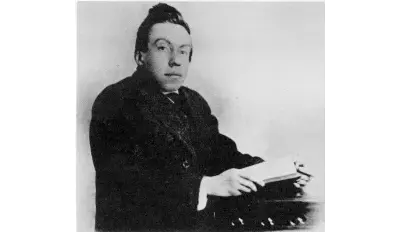
Randolph Silliman Bourne was a progressive writer and intellectual born in Bloomfield, New Jersey, and a graduate of Columbia University. He is considered to be a spokesman for the young radicals living during World War I. His articles appeared in journals including The Seven Arts and The New Republic. Bourne is best known for his essays, especially his unfinished work "The State," discovered after he died. The essay is the source of the well-known phrase "war is the health of the state," by which Bourne lamented governments' success at arrogating authority and resources during conflicts.
