Charles I Quotes
Great number of My Subjects have been and are every year transported to those parts of America … and there settle themselves … amongst which numbers there so many idle and refractory humours whose only or principal end is to live as much as they can without the reach of authority.
The King was concerned that colonists to America were motivated by a desire to escape his authority. He was right.
Charles I, 1600-1649, King of Great Britain & Ireland, 1637
Sourced by: Eigen's Political and Historical Quotations

Les Américains ont échappé à l'Angleterre.


One thing that made this a very unusual declaration was that in 1381 an act (see {616281}) was passed in England which prohibited anyone from leaving the country without the express permission of the monarch. In this case she gave Gilbert the right to take any Englishman who wanted to go. With all the rights of Englishmen from Magna Carta on down, the right of emigration did not appear until modern times.


This early Irish emigration—mostly to America—were mostly Ulster Presbyterians known in America as “Scotch-Irish”. The editors were very concerned as the emigrants were the backbone of the Ulster workforce. The huge Catholic emigration would come later.

In 1848 a number of revolutions flared throughout Europe with a call for democracy rather than monarchy. The Prussian king was one of those who really believed that he was selected by God to rule, was very frightened and tried to enlist the Queen and England to present a united front against the revolutionaries. England, which had already had a strong functioning parliament and extensive voting suffrage, protected most of the rights of its citizens and was a Constitutional Monarchy where there were limits to the power of the monarch. Further, Victoria was extremely popular and in many ways was far ahead of the electorate in terms of modern democratic reforms. So she was not in the panic of many of the other crowned heads of Europe were in. Somewhat following the example of England, King William IV allowed a parliament and minimized the strong military role that characterized Prussia. Most of the 1848 revolutions failed to sieze governments but, as with Prussia, forced reforms in what was a long movement to European democracy that would take another 150 years. Note also the logic about religion. Since the revolutionists did not believe in the divine right of kings, they opposed God’s will on earth. Therefore, they opposed God and must be atheists. Almost all counter revolutionary accusations included the claim—often not true—that the revolutionaries were atheists.

The Punjab, like Afghanistan and some other areas had no real tradition of government. The Sikhs of the Punjab had initiated a war with the British Colonial Empire—The 1st Anglo-Sikh War—which ended with a decisive British victory and a peace treaty where the rulers of the Punjab agreed to keep the peace. However, they really could not control the population and some Sikhs again attacked British and Muslim interests. The Governor-General reported that treaties and commitments with the Punjab leaders really meant little. The British also won the 2nd Anglo-Sikh War.


Grant had negotiated for what is today the Dominican Republic to become a Black state where American Negroes could go. However, like Lincoln before him and most others arguing for Negro emigration, he underestimated the Negro desire to remain where they were and just be free with equal opportunity. See {625675}, {625686}, {625684}, {625683}, {625682} for additional quotations arguing for Black emigration.
Gustav II Adolph. The colony would also exclude slavery, and to make a home for the oppressed of all Christendom. Essentially this was the first plan for multicultural diversification of American immigration. The 30 Years War put the project on hold until after the king’s death and it was not until 1638 that Swedish ships sailed for what they called “New Sweden” landing at Wilmington, Delaware, calling it Christina.
This was just the beginning of the vast emigration from Ireland to America and elsewhere.
English owners of Irish Estates did not get along with the Irish natives very well. They were perceived by most Englishmen as uncivilized, primitive barbarians who were not hard workers or industrious people. Further, England had turned Protestant and made Ireland such, and the Roman Catholic Irishment did not want to have much to do with the English who were occupying their land and robbing them of their religion. So the English estate managers sought to induce English to settle in Ireland.

The Irish Earls of Ulster, after a failed rebellion against English rule, fled to the European continent. As Chichester realized, this created an opportunity for the King to name new Earls and grant them the lands and possessions of the Earls who had fled. And since the Irish people were loyal to their traditional Earls. He suggested that English and Scots colonists be recruited to settle the lands. The King agreed and referred to the project as the “Ulster Plantation”. This was the reason that Northern Ireland had a much larger Protestant population percentage than the rest of Ireland and wanted to remain part of England when Ireland obtained its independence.

In most revolutionary settings leaders have to persuade people who have voted with no success to turn to the rifle. In Ireland at this point, almost all the nationalsits knew that the rifle would help them but they were not sure that a vote would have the effect of a bullet.
The Irish emigrants often sent money home to their families from the United States or other country they had gone to. In many cases, the family members would use the money to follow and the people drain grew even larger. For many years people were Ireland’s largest exports.

Over a decade later a leading English politician realized the same possibility and took steps to prevent it {636871}. Brazil was a colony of Portugal which grew at so fast a comparative rate, that Brazil became many times the size of the original mother country.


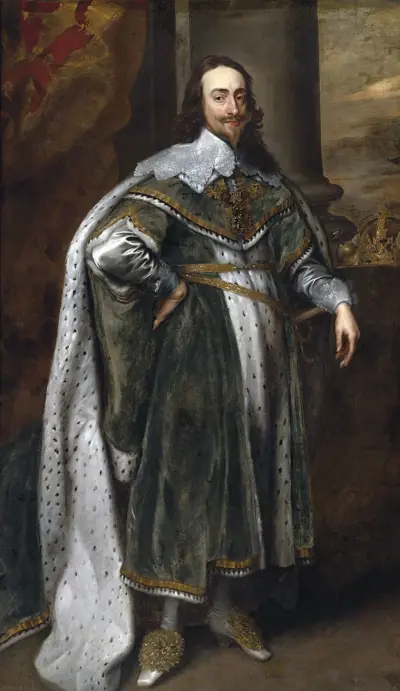
Charles I was King of England, Scotland, and Ireland from 27 March 1625 until his execution in 1649. He was born into the House of Stuart as the second son of King James VI of Scotland, but after his father inherited the English throne in 1603 (as James I), he moved to England, where he spent much of the rest of his life. He became heir apparent to the three kingdoms of England, Scotland, and Ireland in 1612 on the death of his elder brother Henry Frederick, Prince of Wales. An unsuccessful and unpopular attempt to marry him to the Spanish Habsburg princess Maria Anna culminated in an eight-month visit to Spain in 1623 that demonstrated the futility of the marriage negotiations. Two years later, he married the Bourbon princess Henrietta Maria of France.
