Stephen Kinzer Quotes
There is much to justify Turkey's reverence for Ataturk. He is the force that allowed Turkey to rise from the ashes of defeat and emerge as a vibrant new nation.
Kinzer, Stephen. Crescent and Star: Turkey Between Two Worlds. Farrar, Straus and Giroux, 2001.


This quotation illustrated the extreme polarization between the current fundamentalist Muslims, and the Muslim modernists and the West. Kamal Ataturk, the great leader and stateman who is the father of modern Turkey, is castigated by the author for leading the new Turkish parliament to depose the Caliph – the civil and religious autocrat, one of whom reigned from after the death of Muhammad till his abolishment in 1924. Most of the rest of the world credits Ataturk with being one of the great leaders of all time—one who led a democratic revolution which transformed Turkey into the only Muslim secular democracy, requiring pubic secular European type education for all children, giving women the right to vote (before the U. S. even), adopting a European alphabet and dress, and outlook on life—creating most remarkably a total cultural revolution with virtually no loss of life. No revolutionary leader, before or since has led so extensive a political and cultural revolution, and it was a bloodless revolution. Turkey, into the 21st century, was by far the most powerful, industrialized, scientific and modern nation of Muslims in the world and others were far behind. Yet many Islamic theologian still castigate Atatork for his great achievements as being against the will of God.


Ataturk was one of the few revolutionary leaders who appreciated the importance of maintaining a Republic over time and allowed for the possibility that the revolutionary government might become corrupt. So like Thomas Jefferson, he always told citizens to be ever vigilant. In the case of Turkey, on several occasions fundamentalist religious forces have attempted to regain control of the secular republic and the government and mindful of Ataturk’s warnings the Army and other forces have rallied to keep Turkey independent and secular.


This famous quotation, from this important address, at such a critical time in history has been admired for years. Despite his great oratory, the next months were to see almost 2 million Indians of all faiths killed in what was probably the worst internecine violence in human history. Ironically, the politically motivated terrorism had stopped since all the decisions had been made. The motivation for the frightful atrocities that took place from then on was vengeance and fear of more vengeance." 1st Earl Mountbatten of Burma

Turkey under the Ottomans had been an imperialist, expansionist, empire, fighting and ruling over half of Europe and all of the Middle East. Ataturk argued that fighting and taking casualties should only take place to protect the nation’s independence and not to build or maintain an empire.
Ataturk as part of his radical reforms elevated secular teachers to a very high social status and moved science and engineering into the curriculum over the objections of traditionalists and Islamic fundamentalists, and he did this in an overwhelmingly Muslim country.
The Turkish revolution was by historical standards relatively bloodless as compared especially with other republican revolutions like the United State and France. However, the revolution that brought Ataturk to power was a relatively mild one in terms of the immediate changes that unlike many revolutions which produced instant radical change. In Turkey, the radical change took place in the years after the revolution when Ataturk with hardly any bloodshed produced compulsory public secular education, scientific elevation in society, separation of mosque and state, gender equality including universal voting, change to western dress, elimination of the caliphate, speech and press freedom, and many others including changing the entire language to use the Latin alphabet instead of Arabic. No nation in history has gone thought more social and cultural change and modernized so fast as Turkey after its revolution. The result is the most modern and successful Islamic country in the world.
Ataturk was a young major at the time commanding troops of a weak and corrupt Ottoman regime. However a combined English and French (the strongest military powers in Europe) invasion of the Gallipoli Peninsula threatened to capture the Turkish capital, Constantinople. Ataturk alone rallied the Turkish defenders and fought the invaders to a standoff in long drawn out battle with huge casualties on both sides. Ataturk became a national hero. Although Ataturk thereafter was very reluctant to use military force or endanger troops, the thing he always thought worth the supreme sacrifice (including his own) was the independence and sovereignty of the nation. See {584502} for his continuing belief in this type of sacrifice.

At the time, Muslim clerics had a great deal of influence and in many cases legal control over all facets of Turkish society much as exists in other Islamic societies today. They even controlled what was taught in the schools. Remarkably, without bloodshed, Ataturk broke both the power and the influence of the clerics on all official and public activities. Many Turkish Muslims even developed a type of reformed Islam with the relationship between the individual and the clerics one of parity much like Protestant churches in the West. At the same time there was a more orthodox part of the population and while they sent their children to religious schools, they also attended public schools so even the orthodox Muslims in Turkey learned science and modern subjects which are still not taught in most Islamic schools and madrassas.
The palace, which had belonged to the Ottoman Caliphs, who were called “Shadows of Allah on Earth”.
Ataturk wanted to change the Turkish alphabet from Arabic to Latin characters. Experts estimated that it would take at least 15 years. Ataturk allowed no parallel usage, made it illegal for any documents or signs to be written in Arabic, and it was done in 3 months. The benefit was that Arabic took much longer to learn. Relatively few people could read or write. Arabic had been imposed on the Turkish language. Printing with movable type was much more difficult in Arabic and Atatuk wanted many more books published and read. Soon Turkey had the highest literacy rate in the Islamic world, and rivaled that of most Western nations. Making the sudden change not only had the advantage of fixating the entire society on the change, but did not allow opponents of the change (of which there were many) —especially the Islamic clergy many of whom felt that the Koran was the only book that people should be allowed to read.
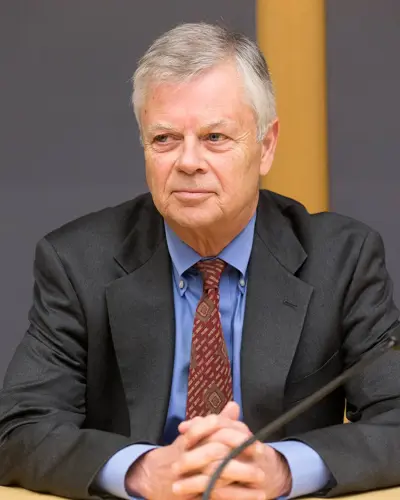
Stephen Kinzer is an American author, journalist and academic. A former New York Times correspondent, he has published several books, and writes for several newspapers and news agencies.
