Theodore C. Sorensen Quotes
The religious issue was the major issue of the Kennedy campaign…. Nixon said over and over again that he would not make an issue over Kennedy’s religion.
Kennedy was a Roman Catholic and there was a great deal of anti-Catholic prejudice in the country then. Al Smith, the only Catholic who had run for the Presidency, was defeated with almost all his opposition coming from anti-Catholic forces appealing to the then popular prejudice that if a Catholic became President, the Pope and the Vatican would be running America. Richard Nixon, a master politician with few scruples, cleverly kept raising the religious question in the voters minds by saying that he would not make Kennedy’s religion and issue of the campaign. Kennedy barely won.
Theodore C. Sorensen, Presidential assistant and speech writer (Democrat), Recommendation for Presidential Speech Writing for Major Addresses, Speech, January 31, 1995
Sourced by: Eigen's Political and Historical Quotations

JFK was running for the Presidency and was Roman Catholic. There was a great deal of anti-Catholic prejudice in the country with many people fearing that a Catholic President would mean Papal control of the United States. Peale was the most influential American clergyman of the day, and while he did not overtly oppose the Kennedy candidacy, he did state that he thought the election of a Catholic would profoundly change America. Kennedy won by a thin margin, but none of the events that the anti-Catholics feared, came to pass.


Kennedy was being hurt be fears that as a Catholic, he would be beholden to the Pope and the Catholic Bishops. There were many protestants who believed that the Catholic Church was antithetical to democracy and some who even believed that Catholicism was the religion of Satan. Kennedy decided to confront the issue head on.


It was not until 1780 that Catholics were allowed to even be members of Town Corporations.

Kennedy had never been at the left wiing of the Democratic Party. His father, Joseph Kennedy, was known to all Irish Catholic politicans and disliked by most. He had supported big finance and business and was no great friend of labor. He was fired by FDR for publicly supporting Hitler before WWII and urging non support of England. He badmouthed FDR and Eleanor Roosevelt--Democratic icons. President Truman had to be stopped by a Secret Service agent from throwing the elder Kennedy out the window of a Boston hotel. He was a nasty man who threw his money around. But Senator Kennedy himself had never said a word criticizing Joeseph McCarthy or comdemning McCarthism and his other exceses leaving the criticism to other Democrats and even Republicans. (His silence was at the advice of his father.) Ribicoff a strong liberal knew Kennedy well and felt that Kennedy would not be constrained by his father's views, and that Kennedy was a true liberal at heart and would demonstrate that if elected President.


In this extraordinary act, the people who are persecuted are made to pay extra taxes to facilitate their persecution
A videotape of this response was used by Kennedy as a campaign TV ad. American history had been full of anti-Catholic prejudice and it was responsible for the Presidential loss of Al Smith. Kennedy hit the issue directly betting that America had become more tolerant. He was right but he still lost several states because of religious bigotry.

Martin wanted William Howard Taft to answer questions about his religious beliefs. Taft was TR’s selection to be his successor. Ironically, a starting with John F. Kennedy, many presidential candidates have been asked about their religious belief’s and have answered whereas Roosevelt would have them not reply to such inquiries.

Vladimir Lenin. In their quest for world revolution, the Russian Communists had more problems with arguments in the United States whose reforms and economy had produced a very high standard of living. They knew that to effect a revolution, they had to reach the middle class and the intellectuals. They had little economically to attack America with but they were able to attack the United States morally. In addition to religious discrimination, the Communists attacked other forms of discrimination anti-Black, legal, racial segregation (See behavior in the related quote.)

New Ross was under siege by Cromwell and his English Parliamentarian troops. After two days, the town tried to negotiate terms of surrender and one of the main things they asked for was freedom of religion to practice Roman Catholicism. This famous response set the stage for religious bigotry over the next years. Cromwell’s reasons for not allowing Catholicism to be practiced was not only one of religious zeal. At the time, the Roman Catholic Church was a major geopolitical power under a Pope who commonly supported or even dispatched troops for geopolitical and religious ends. The Vatican was particularly resentful of England for separating from the Church and asserting that the King of England was the head of the Church and not the Pope. Therefore Cromwell and many Englishmen had to deal with the reality that every practicing Catholic in the realm was a potential spy, traitor, and/or rebel. This fear of control of countries by the Pope strongly affected America, and was responsible for the defeat of the first Catholic Presidential Candidate, Al Smith. It was also a major factor in the election of John F. Kennedy so he dealt with it head on.


It took only 10 days after the First Continental Congress met for religious bigotry to arise. After hundreds of years of Catholic/Protestant strife, each sect looked upon the other, not only as theologically wrong, but dangerous to the liberty of the other. Unfortunately, the organied religions had acted so badly towards other religions, that everyone was justified in fearing the other religions. This quotation illustrates a then typical attitude of many American Protestants that the Catholic Church was a threat to national security. Ironically, in modern times, anti-Catholic bigots use this quotation to demonstrate that the United States was founded as a Christian Protestant nation—not a general Christian nation. A small, vicious anti-Catholic sentiment still exists, usually by a minority of right wing Protestant religious fundamentalists. Protestant England had just repealed the laws making Catholicism illegal, but this was regarded at that time as intolerable for the new America. This was one of the disputes which that the Founding Fathers were faced with later and one of the reasons that they were so absolute in the need for the 1st Amendment.


Smith was the first Catholic to run for the Presidency. There were many who opposed him who were anti-Catholic bigots. Were it not for this religious discrimination Smith would almost certainly have been President.


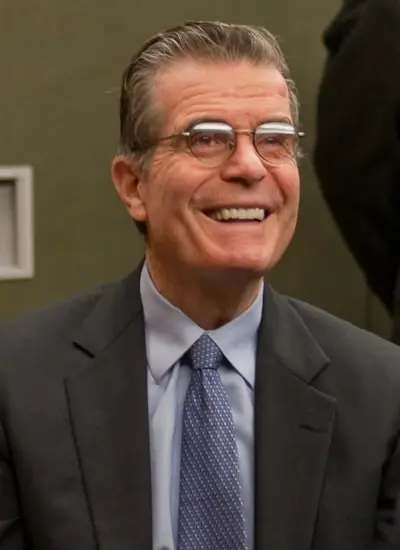
Theodore Chaikin Sorensen was an American lawyer, writer, and presidential adviser. He was a speechwriter for President John F. Kennedy, as well as one of his closest advisers. President Kennedy once called him his "intellectual blood bank". Most notably, he was generally regarded as the author of Profiles in Courage even before fully admitting it in his 2008 memoir. The book won Kennedy the Pulitzer Prize for biography in 1957. Sorensen was also the primary author of Kennedy's 1962 "We choose to go to the Moon" speech.
