Noah Feldman Quotes
For Mitt Romney, the complex question of anti-Mormon bias boils down to the practical matter of how he can make it go away. Facing a traditional American anti-Catholicism, John F. Kennedy gave a speech during the 1960 presidential campaign declaring his private religion irrelevant to his qualifications for public office.
Feldman, Noah. "What Is It About Mormonism?" The New York Times, 6 Jan. 2008.

Kennedy was a Roman Catholic and there was a great deal of anti-Catholic prejudice in the country then. Al Smith, the only Catholic who had run for the Presidency, was defeated with almost all his opposition coming from anti-Catholic forces appealing to the then popular prejudice that if a Catholic became President, the Pope and the Vatican would be running America. Richard Nixon, a master politician with few scruples, cleverly kept raising the religious question in the voters minds by saying that he would not make Kennedy’s religion and issue of the campaign. Kennedy barely won.


In this speech, and in {634756}, he argued against unification to a public that was mostly opposed. The leadership was interested because they were facing the Muslim Ottoman Turks who were getting more powerful each day. The Eastern Emperor, Constantine XI, more of a soldier and politician than a cleric, wanted the military strength of the Franks and other Western European Christian armies to help protect the Eastern Empire and Byzantium and were willing to reunite under the Pope to get it. Gennadios and his faction were not. They prevailed and the next year, the Muslims conquered Byzantium which had little help from the armies of the Western Roman Empire.


It was not until 1780 that Catholics were allowed to even be members of Town Corporations.

Catholics were blamed by some for the defeat of Henry Clay in 1844. Anti catholic sentiment was high:. Johnson was then a Congressman representing a district where there were few Catholics and strong anti-Catholic feeling.

Kennedy had never been at the left wiing of the Democratic Party. His father, Joseph Kennedy, was known to all Irish Catholic politicans and disliked by most. He had supported big finance and business and was no great friend of labor. He was fired by FDR for publicly supporting Hitler before WWII and urging non support of England. He badmouthed FDR and Eleanor Roosevelt--Democratic icons. President Truman had to be stopped by a Secret Service agent from throwing the elder Kennedy out the window of a Boston hotel. He was a nasty man who threw his money around. But Senator Kennedy himself had never said a word criticizing Joeseph McCarthy or comdemning McCarthism and his other exceses leaving the criticism to other Democrats and even Republicans. (His silence was at the advice of his father.) Ribicoff a strong liberal knew Kennedy well and felt that Kennedy would not be constrained by his father's views, and that Kennedy was a true liberal at heart and would demonstrate that if elected President.

In 1877 Wasburn was dropped from the List of Ministers by the Unitarian Church. He had become very critical of organized and orthodox religion of all kinds.

Lopez and Elizer were Jews who had escaped the persecution in Portugal to come to America. They and other non-Christians could live and work in Rhode Island but could not vote or hold public office by a previous decision of the Rhode Island Assembly. See {619707}.The Jews had petitioned for their civil rights.
Toleration is a relative term. The Muslim Moors made Christians (and Jews) pay a special tax. At times they were forced to wear special clothing so that they could be readily identified. And they could not build churches larger or taller than the smallest mosque in the community. At times, their occupations were restricted but at other times Christians and Jews were appointed to the highest positions like Vizier. The Inquisition, in contrast, forced all Muslims (and Jews) to leave the country without any of their property or money or be tortured and killed—usually by burning at the stake unless of course that they converted to Christianity.


Robertson does not mention the fact that Hindus are the majority of the world’s largest democracy—India. Freedom thrives there and political equality is extensive. However, economic equality is sadly lacking as in the Untied States. However, India is more unequal.

Porush was one of the Haradi--ultra-orthodox Jews. In the land of the Jewish people, he argued against religious freedom for Jews unless they were Orthodox Jews, while ironically, the majority of Jews in the world and even in Israel followed the Conservative or Reform branches of Judaism or were secular. At the time the Orthodox Jewish movement was the only one that was recognized officially by the government. Porush and some of the more fanatical Haradi were determined to keep the Conservative and Reform Jewish branches unrecognized and unsupported by the government. (Israel does not have separation of church and state and economically supports the Orthodox Jewish establishment but not the other majority branches of Judaism.) The "Women of the Wall" is one of the major groups in Israel advocating equal government treatment for all citizens o0f Israel. Orthodox Judaism, like many other orthodox religions are very sexist and women were actually banned from praying at the holiest of Jewish places, the Western or Wailing Wall. Women of the Wall had won a major decision of the Israeli Supreme court that women could not be denied the right to pray at the Wall. The orthodox rabbis who the government allowed to control access to the Wall, set aside a small area for women at the "Dung Gate" where the garbage was carried out. Women of the Wall were back in court and this prompted Porush's outburst. He was cebsured by the Ethics Committee of the Israeli Knesset (Parliament).

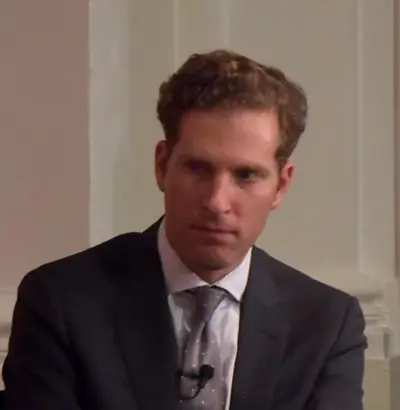
Noah R. Feldman is an American academic, author, columnist, public intellectual, and host of the podcast Deep Background. He is the Felix Frankfurter Professor of Law at Harvard Law School and chairman of the Society of Fellows at Harvard University. His work is devoted to constitutional law, with an emphasis on free speech, law & religion, and the history of constitutional ideas.
