Christopher Columbus Quotes
Your Highness ought not to consent that any foreigner does business or sets foot here [the New World] except Christian Catholics.
Christopher Columbus, 1451-1506, Italian Explorer, Journal to Spanish Queen Isabella
Sourced by: Eigen's Political and Historical Quotations

The origins of the extreme religious intolerance of Spain occurred centuries before the excesses of the Spanish Inquisition. Before the Conference the Visigoths and their king had been converted to Christianity but not all cared for the new religion.

It was not until 1780 that Catholics were allowed to even be members of Town Corporations.

Toleration is a relative term. The Muslim Moors made Christians (and Jews) pay a special tax. At times they were forced to wear special clothing so that they could be readily identified. And they could not build churches larger or taller than the smallest mosque in the community. At times, their occupations were restricted but at other times Christians and Jews were appointed to the highest positions like Vizier. The Inquisition, in contrast, forced all Muslims (and Jews) to leave the country without any of their property or money or be tortured and killed—usually by burning at the stake unless of course that they converted to Christianity.

Martin wanted William Howard Taft to answer questions about his religious beliefs. Taft was TR’s selection to be his successor. Ironically, a starting with John F. Kennedy, many presidential candidates have been asked about their religious belief’s and have answered whereas Roosevelt would have them not reply to such inquiries.

In this extraordinary act, the people who are persecuted are made to pay extra taxes to facilitate their persecution

The Soviet state had varied views regarding religion in different times. In the early days of the Russian Revolution, the Russian Orthodox Church was a major supporter of the Csar and serfdom. That caused a certain hostility to the Russian Church. That Church meanwhile had previously been extremely hostile to Jews and Roman Catholics and never recognized Protestant Churches. So Russians as a group were already discriminating against all religion except the Russian Orthodox Church before the Communist Revolution took place. When the Russian Communists were well entrenched in power, they saw the Russian Church as an obstacle to modernization and were hostile to any group that had a loyalty to any force or deity that was not the Soviet State.

Vladimir Lenin. In their quest for world revolution, the Russian Communists had more problems with arguments in the United States whose reforms and economy had produced a very high standard of living. They knew that to effect a revolution, they had to reach the middle class and the intellectuals. They had little economically to attack America with but they were able to attack the United States morally. In addition to religious discrimination, the Communists attacked other forms of discrimination anti-Black, legal, racial segregation (See behavior in the related quote.)

Smith was the first Catholic to run for the Presidency. There were many who opposed him who were anti-Catholic bigots. Were it not for this religious discrimination Smith would almost certainly have been President.


Kennedy was a Roman Catholic and there was a great deal of anti-Catholic prejudice in the country then. Al Smith, the only Catholic who had run for the Presidency, was defeated with almost all his opposition coming from anti-Catholic forces appealing to the then popular prejudice that if a Catholic became President, the Pope and the Vatican would be running America. Richard Nixon, a master politician with few scruples, cleverly kept raising the religious question in the voters minds by saying that he would not make Kennedy’s religion and issue of the campaign. Kennedy barely won.

Wesley had been to Island several times and was interested in affairs there. He was a strong advocate of freedom of religion but the violence of the earlier religious conflict made him very wary of the Irish Roman Catholics who seemed to him particularly prone to religious violence.

Porush was one of the Haradi--ultra-orthodox Jews. In the land of the Jewish people, he argued against religious freedom for Jews unless they were Orthodox Jews, while ironically, the majority of Jews in the world and even in Israel followed the Conservative or Reform branches of Judaism or were secular. At the time the Orthodox Jewish movement was the only one that was recognized officially by the government. Porush and some of the more fanatical Haradi were determined to keep the Conservative and Reform Jewish branches unrecognized and unsupported by the government. (Israel does not have separation of church and state and economically supports the Orthodox Jewish establishment but not the other majority branches of Judaism.) The "Women of the Wall" is one of the major groups in Israel advocating equal government treatment for all citizens o0f Israel. Orthodox Judaism, like many other orthodox religions are very sexist and women were actually banned from praying at the holiest of Jewish places, the Western or Wailing Wall. Women of the Wall had won a major decision of the Israeli Supreme court that women could not be denied the right to pray at the Wall. The orthodox rabbis who the government allowed to control access to the Wall, set aside a small area for women at the "Dung Gate" where the garbage was carried out. Women of the Wall were back in court and this prompted Porush's outburst. He was cebsured by the Ethics Committee of the Israeli Knesset (Parliament).

The Prince had given $20 million to American Universities to establish Islamic Studies programs however. The Muslim religion requires believers to proselytize and spread the faith, while Saudi and Islamic law prohibits any other faith from being public or promoted. It is illegal, for example, to even bring a Christian Bible into the Kingdom. During the Gulf War, American soldiers defending Saudi Arabia were not allowed to bring in their religious texts unless they were Muslims.


This was the beginning of the inquisition.

Catholics were blamed by some for the defeat of Henry Clay in 1844. Anti catholic sentiment was high:. Johnson was then a Congressman representing a district where there were few Catholics and strong anti-Catholic feeling.
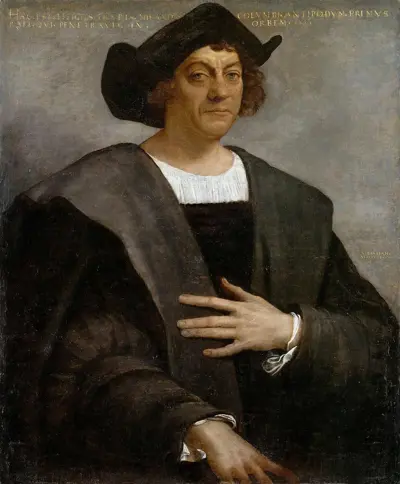
Christopher Columbus was an Italian explorer and navigator who completed four voyages across the Atlantic Ocean, opening the way for the widespread European exploration and colonization of the Americas. His expeditions, sponsored by the Catholic Monarchs of Spain, were the first European contact with the Caribbean, Central America, and South America.
