Vladimir Lenin Quotes
The oppressed are allowed once every few years to decide which particular representatives of the oppressing class are to represent and repress them in parliament.
Lenin, Vladimir I. The State and Revolution. 1917. Lenin Collected Works, Vol. 25, Progress Publishers, 1964, p. 461.


for a Muslim in a non-Islamic country Theological & Legal Expert. A fatwa is a religious legal ruling. This is an area of some controversy. Other Mufti’s Fatwas have taken the opposite view of non-participation.


Vladimir Lenin


This was his version of the governing body of a republican commonwealth. His assumption was that the ablest men would be the nobility, the educated and religious (Catholic) elite.


the power a ruler or a ruling class

This claim has very often been true especially in South and Latin America, but in the United States generally it has been a delusion that the populists are in the majority although the general have been neglected and as a result they defy a powerful majority. Good examples of this are the Southern populist movements after the Civil War, the Populist Party, and the Populism of the second decade of the 21st century.

The term “rugged individualism” was used at the time be very conservatives and the very wealthy to describe business leladers with words that had very good public connotations. They argued that it would be undesirable to curtail their individualism that was so important by any government regulations or laws that would limit what the business leaders could do. However, the reality was that these very successful and powerful “rugged individualists” had regimented most everyone else—employees, consumers, and small businessmen who might sell them services or products. To Tugwell, if the wealthy and powerful few had no restrictions on their individualism, there would be precious little individualism for most of society. He sought a balance of regulating the individualism and prerogatives of the few somewhat in order to allow the vast majority of people to be able to have individuality as well.


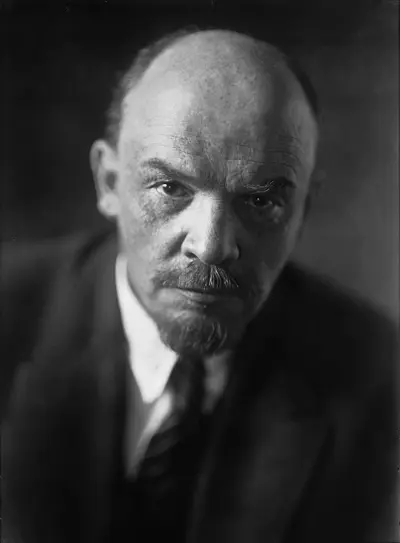
Vladimir Ilyich Ulyanov, better known by his alias Lenin, was a Russian revolutionary, politician, and political theorist. He served as the first and founding head of government of Soviet Russia from 1917 to 1924 and of the Soviet Union from 1922 to 1924. Under his administration, Russia, and later the Soviet Union, became a one-party socialist state governed by the Soviet Communist Party. A Marxist, he developed a variant of this communist ideology known as Leninism.
