Jorge Luis Borges Quotes
Democracy is an abuse of statistics.
Barnstone, Willis, editor. Borges at Eighty: Conversations. Indiana University Press, 1982, p. 112.


Bartolo was the most famous legal expert of his day and for many years thereafter as he died at the age of 44—the height of his career. In Italy, Spain and other nations of Europe there were statutes passed that said if there was no precedent in Roman Law, the writings of Bartolo should dictate the law.

This was his version of the governing body of a republican commonwealth. His assumption was that the ablest men would be the nobility, the educated and religious (Catholic) elite.


After the many years of the Cold War attacking of Democracy, for many Russians the word conveys a bad image of their old enemy. For others, using the word reminds them that the Soviet Union collapsed and the Russians lost the cold war—an unpleasant memory. Yet many of the leaders of the Russian Federation very much wanted to democratize Russia. Bushmin had this very practical, albeit humorous, solution.
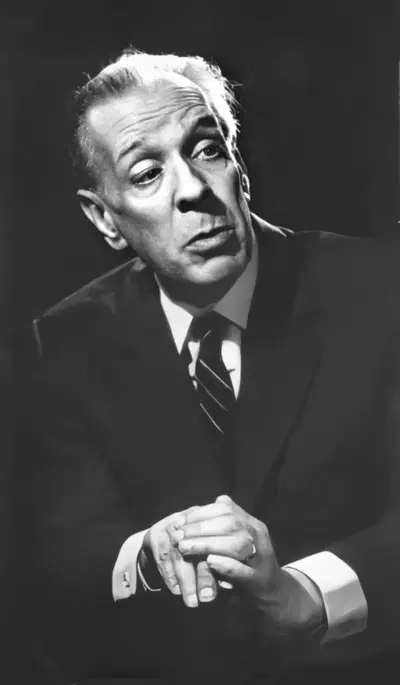
Jorge Francisco Isidoro Luis Borges Acevedo was an Argentine short-story writer, essayist, poet and translator, and a key figure in Spanish-language and universal literature. His best-known books, Ficciones (Fictions) and El Aleph (The Aleph), published in the 1940s, are compilations of short stories interconnected by common themes, including dreams, labyrinths, philosophers, libraries, mirrors, fictional writers, and mythology. Borges' works have contributed to philosophical literature and the fantasy genre, and have been considered by some critics to mark the beginning of the magic realist movement in 20th century Latin American literature. His late poems converse with such cultural figures as Spinoza, Camões, and Virgil.
