Robert McChesney Quotes
In many respects we now live in a society that is only formally democratic, as the great mass of citizens have minimal say on the major public issues of the day, and such issues are scarcely debated at all in any meaningful sense in the electoral arena
Robert McChesney, Media Analyst, 'Rich Media, Poor Democracy', 2000
Sourced by: Eigen's Political and Historical Quotations


This constitution, 13 years later, became the basis for the national Batavian Constitution.


The University Presidents had written to the American Public arguing that the German aggression was the result of the militarists in the German society dominating the people and pushing them to war. They argued that most German people were not really responsible. Lamprecht took exception and argued that the German policy was the democratic will of the majority of the German people. He claimed that Germany at the time was more of a de facto democracy than America—as the Untied States did not have a Voting Rights Act or any way of de facto ensuring that all citizens could vote—particularly Negroes in the South. While he was accurate about the voting aspects of a democracy, Germany neither had the Constitution nor a judiciary that was independent and co-equal to the executive and legislature, but Germany did not have the institutions with democratic traditions. The greatest embarrassment to modern Germans is that Adolf Hitler was actually elected by a majority of Germans and was very popular until things in Germany started to go poorly. This quotation is very important in that it shows the importance of a Constitution to limit the powers of even a popularly elected government.

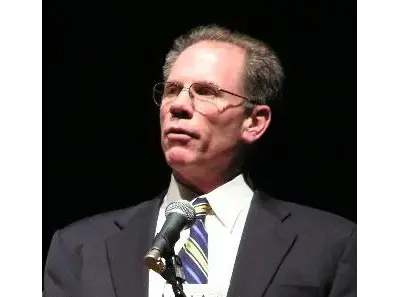
Robert Waterman McChesney is an American professor notable in the history and political economy of communications, and the role media play in democratic and capitalist societies. He is the Gutgsell Endowed Professor in the Department of Communication at the University of Illinois at Urbana–Champaign. He co-founded the Free Press, a national media reform organization. From 2002–12, he hosted Media Matters, a weekly radio program every Sunday afternoon on WILL (AM), Illinois Public Media radio.
