John Ensign Quotes
The act of voting by ordinary Iraqis in the face of extreme danger confirms President Bush's belief that people around the globe, when given a chance, will choose liberty and democracy over enslavement and tyranny.
Ensign, John. "Statement on Iraqi Elections." Congressional Record, 109th Cong., 1st Sess., Government Printing Office, 31 Jan. 2005.


In Philadelphia, the state delegates had just started to vote for independence. The majority of each state delegation determined the vote for the state. Delaware had three delagates, but only two were in Philadelphia. Rodney, the third delegate from Delaware, had been attending a meeting in Dover when he received word that the other two Delaware delagates Thomas McKean and George Read were split—McKean for and Read against independence. Rodney immediately left for Philadelphia late on July 1. He rode all night in a thunderstorm to traverse the 80 miles to Philadelphia. He arrived in his spurs and riding boots and cast his famous vote and thus Delaware voted for Independence. After the vote, the next 2 days were spent drafting the Declaration of Independence and Rodney signed it on July 4. After Rodney returned to Delaware, he was ousted in the next election by conservative loyalists who felt that Rodney had betrayed them and England.


The Kandahar region of Afghanistan was occupied by the Persians under Gurgin Khan. The Persians at the time were Shiite Muslims while the Afghans were Sunnis. Gurgin Khan forced all the Sunnis to convert to become Shia under threat of death. Mirwais Hotak led a force of freedom fighters, and defeated the Persians, killing Gurgin Khan in the process. There were some Afghan people who by collaborating with the Persians had done very well for themselves. They were anxious about their liberator and some were thinking about sneaking away and joining up with the Persians. He then made this speech, remarkable for any time, and especially so at the early 18th century. Notice, that unlike most other peoples of the Middle East, the Afghan’s placed a high value on freedom, and were willing to fight for it. In that sense, Afghanistan was culturally and politically different from the rest of the Islamic world.

This illustrated the problem with Nazi Germany where Hitler was elected by the people. In a Constitutional democracy such as the United States, when an elected President attempts to cut away constitutionally insured freedoms, there is public opinion, the press, a Congress and a Supreme Court to check him as occurred in the George W. Bush Administration over wiretapping, torture, and handing of war captives. These were checked, but they were minor and trivial compared to Nazi Germany’s abuse of freedom. In Germany, Hitler weakened or destroyed all those who might check his power and therein lies the essential difference. The despot must eliminate or weaken the checks on him. In the American democracy, the Congress finally checked John Adams’ Alien & Sedition Act as did public opinion by turning him out of office after one term. But in each case, in democracy or dictatorship, the same argument is often made if the elected leader impinges on some freedoms: it is legitimate because he represents the will of the people. Spencer and many others have always disagreed.

There was a movement amongst some Arab counties towards democracy in 2005. There was Western diplomatic pressure on Egypt and Saudi Arabia to hold free elections for the first time.


He is supportive of the United Nations in the present configuration where it has no governmental power but is a forum for international diplomacy.


There was a March on Washington planned for 1942. However, the leaders were persuaded to call it off as the United States was in the midst of the Second World War. The military was segregated and so were the defense plants. FDR made some concessions regarding defense jobs but discrimination was still rampant. It would be 20 years later when the March actually took place with some of the same leaders organizing it.


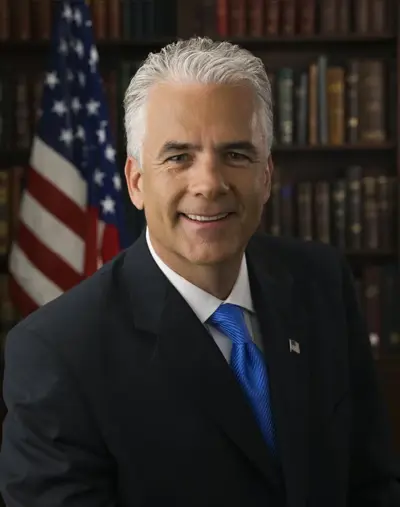
John Eric Ensign is an American veterinarian and former politician from Las Vegas, Nevada. A member of the Republican Party, Ensign was a Congressman and United States Senator from Nevada; he served in the latter seat from January 2001 until May 2011, when he resigned amid a Senate Ethics Committee investigation into his attempts to hide an extramarital affair. Following his resignation from the Senate, Ensign returned to Nevada and resumed his career as a veterinarian.
