Herbert Spencer Quotes
If people by a plebiscite elect a man despot over them, do they remain free because the despotism was of their own making? Are the coercive edicts issued by him to be regarded as legitimate because they are the ultimate outcome of their own votes?
This illustrated the problem with Nazi Germany where Hitler was elected by the people. In a Constitutional democracy such as the United States, when an elected President attempts to cut away constitutionally insured freedoms, there is public opinion, the press, a Congress and a Supreme Court to check him as occurred in the George W. Bush Administration over wiretapping, torture, and handing of war captives. These were checked, but they were minor and trivial compared to Nazi Germany’s abuse of freedom. In Germany, Hitler weakened or destroyed all those who might check his power and therein lies the essential difference. The despot must eliminate or weaken the checks on him. In the American democracy, the Congress finally checked John Adams’ Alien & Sedition Act as did public opinion by turning him out of office after one term. But in each case, in democracy or dictatorship, the same argument is often made if the elected leader impinges on some freedoms: it is legitimate because he represents the will of the people. Spencer and many others have always disagreed.
Herbert Spencer, 1820-1903, English Social Philosopher, The Man versus the State, 1884
Sourced by: Eigen's Political and Historical Quotations


The manifesto was designed to stop the practice of one country annexing part of another either by conquest or by purchase from the previous dominant power. Nations would trade and sell colonies or provinces to each other without any thought whatsoever to the wishes of the populations of those territories.


This quotation is historically important because Davis clearly states the reason for the rebellion of the South. The anti-slave states were growing at a greater rate than the slave states and despite the greater voting power that a southerner had (a result of the 3/5 count of slaves for census purposes, and the Senate), the handwriting was on the wall and the majority of the United States was against the vicious institution of slavery and would make it unprofitable, impossible and/or illegal in the coming years. Southern slavery advocates saw this as a “tyranny of the majority” and therefore took up arms. In the early 20th century, apologists for the Southern rebellion tried to promote the idea that there were reasons other than slavery, but this quotation and the resolutions of the states who withdrew from the Union make it clear that the right to maintain slavery was the only significant issue. In that sense it was a States’ Rights issue, but the South was opposed to States’ Rights when it came to States refusing to return fugitive slaves when Federal Law required such under the Dred Scott Supreme Court Decision.

This was a classic debate over universal male suffrage. Rainborough had made a forceful argument for equality as a spokesperson for the Levellers in this famous debate. Ireton (See {619711}) eloquently gave the classic counter-argument that property owners had much more at stake and therefore should have much more of a say on governmental affairs. Early America actually sided with Ireton but modern America holds with Rainborough.


With so many revolutionary rulers of new nations suppressing all opposition, the history of Ataturk and Turkey is unique. Ataturk was so popular and his People’s Party so successful that there was no opposition and Turkey had one party rule. However, Ataturk was determined to have Turkey become a parliamentary democracy as good as the Western nations of Europe. So a tradition of multi-party democracy was needed. So Ataturk actually went to his friend Fethi Okyar and asked him to start an opposition party and oppose the government. Fethi was a strong supporter of the revolution and generally was in concurrence with Ataturk and the People’s Party on everything. Ataturk however convinced him that they had to start a tradition that would take Turkey through the future, and he did create a new party-- Serbest Cumhuriyet Fırkası (Liberal Republican Party) and worked hard to find differences with the People’s Party and the Government. One immediate contribution was the oversight that the new party provided—a strong tradition that exists to this day in Turkey.
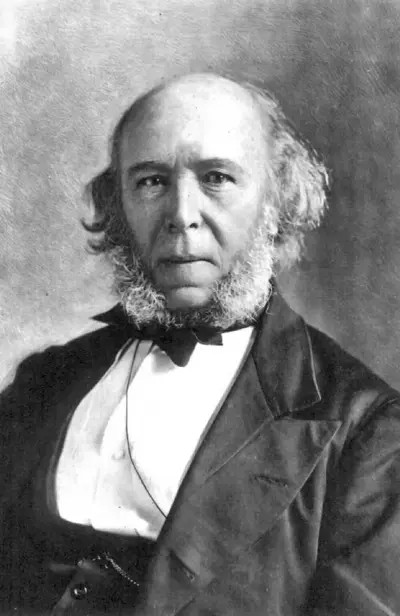
Herbert Spencer was an English philosopher, biologist, anthropologist, and sociologist famous for his hypothesis of social Darwinism whereby superior physical force shapes history. Spencer originated the expression "survival of the fittest", which he coined in Principles of Biology (1864) after reading Charles Darwin's On the Origin of Species. The term strongly suggests natural selection, yet Spencer saw evolution as extending into realms of sociology and ethics, so he also supported Lamarckism.
