Henry Ireton Quotes
No man hath a right to an interest or share in the disposing of the affairs of the kingdom... that hath not a permanent fixed interest in this kingdom.
This was a classic debate over universal male suffrage. Rainborough had made a forceful argument for equality as a spokesperson for the Levellers in this famous debate. See {619710}. Ireton eloquently gave the classic counter-argument that property owners had much more at stake and therefore should have much more of a say on governmental affairs. Early America actually sided with Ireton, but modern America holds with Rainborough.
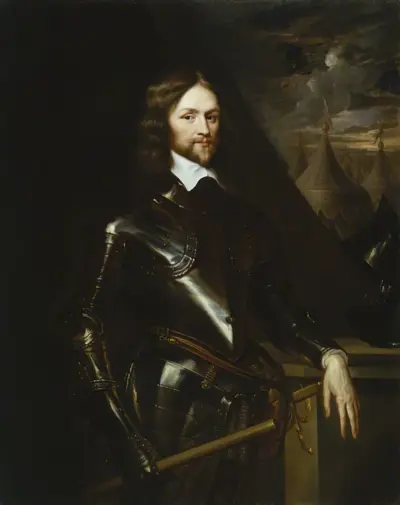
Henry Ireton, 1611-1651, English Parlimentary General, MP (Rump and Long Parliaments), Lord Deputy of Ireland, Son-in-law of Oliver Cromwell, Putney Debates against Thomas Rainborough, Church of St Mary the Virgin, Putney, Surrey, in October and November 1647
Sourced by: Eigen's Political and Historical Quotations

This was a classic debate over universal male suffrage. Rainborough had made a forceful argument for equality as a spokesperson for the Levellers in this famous debate. Ireton (See {619711}) eloquently gave the classic counter-argument that property owners had much more at stake and therefore should have much more of a say on governmental affairs. Early America actually sided with Ireton but modern America holds with Rainborough.

Hunt gave as an example Mary Smith of Stanmore. This quotation is very interesting in the history of women’s suffrage. Hunt was a strong advocate for Universal Suffrage (See {616653}.) At the time, even men had to be a taxpayer and own a sufficient amount of property to vote. Less than 20% of the population of Britain were allowed to vote. The argument at the time was that the husband would represent the family’s interest at the ballot box and there was no need for women to vote. But by facing parliament with the logical inconsistency of its position, he was able to make his point, although there were very few women like Mary Smith who were single and had the economic resources to qualify. Most widows remarried so even if they had economic resources, there was a man who could assume the then perceived role of head of the household.

The issue was the voting franchise for Negroes in the aftermath of the Civil War.


Muir had spoken at the Convention of Scottish Friends of the People at Edinburgh in 1792. He had advocated election reform allowing all men to vote, not just property owners and was sentenced by Braxfield to the Australian penal colony at Botany Bay. Braxfield expressed the deep distrust the establishment felt even for merchants, traders and others with fungible assets.


1st Baron Macaulay. Macaulay was opposed to universal suffrage, and when John Stuart Mill and others started a movement for allowing all males to vote, this was one of the tactics to stave off allowing the lower classes to vote.


- Born:
- Died: November 26, 1651
- Nationality:
- Profession: Politician
Henry Ireton was an English general in the parliamentary army during the English Civil War, and the son-in-law of Oliver Cromwell.
