Jesse Jackson Quotes
When they wrote the Constitution, only white male landowners had the right to vote.
Jackson, Jesse. "The Rainbow Coalition." Democratic National Convention, 17 July 1984, Moscone Center, San Francisco.

Hunt gave as an example Mary Smith of Stanmore. This quotation is very interesting in the history of women’s suffrage. Hunt was a strong advocate for Universal Suffrage (See {616653}.) At the time, even men had to be a taxpayer and own a sufficient amount of property to vote. Less than 20% of the population of Britain were allowed to vote. The argument at the time was that the husband would represent the family’s interest at the ballot box and there was no need for women to vote. But by facing parliament with the logical inconsistency of its position, he was able to make his point, although there were very few women like Mary Smith who were single and had the economic resources to qualify. Most widows remarried so even if they had economic resources, there was a man who could assume the then perceived role of head of the household.


This was a year after the United States gave women the right to vote.


The election franchise in Ohio was originally only given to white residents who had paid state or local taxes. At the time, there were no sales or income taxes, so the only people who paid taxes were property owners. So this clause had the same effect as many other state constitutions of the time of limiting voters to the relatively wealthy. See the earlier Massachusetts Constitution {616748}. However, not that by this time race became a criterion in voting eligibility. In the Massachusetts case and some other states, a Black or an Indian who owned property could vote. But in Ohio, race per se was a disqualification if not white. This also precluded, Indians and Asians from voting in Ohio.

This was a classic debate over universal male suffrage. Rainborough had made a forceful argument for equality as a spokesperson for the Levellers in this famous debate. See {619710}. Ireton eloquently gave the classic counter-argument that property owners had much more at stake and therefore should have much more of a say on governmental affairs. Early America actually sided with Ireton, but modern America holds with Rainborough.


What is interesting, that few people realize, is that large number of men who had never voted before, and would not be able to vote afterwards (the were not property owners for example), were allowed to vote in the ratification debate. As a result, an entire new socio-economic class was empowered and became interested in politics for the first time in history. The result was greater and wider public interest than there had been or would be for many years to come. All voting requirements had been set by the states and were still so after the Constitution was adapted and still is the current situation, although there has been a constant battle in many states to keep Blacks and other minorities from voting between the desires of the states and Federal pressure after the Civil War Constitutional amendments.


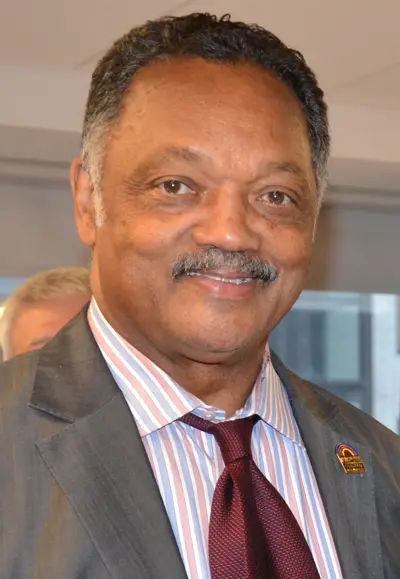
Jesse Louis Jackson is an American political activist, Baptist minister, and politician. He was a candidate for the Democratic presidential nomination in 1984 and 1988 and served as a shadow U.S. Senator for the District of Columbia from 1991 to 1997.
