Poland Quotes
The right to vote belongs to every Polish citizen without distinction of sex, who, on the day of the proclamation of the elections, is twenty-one years of age
This was a year after the United States gave women the right to vote.
Poland, Article 12, Constitution of 1921
Sourced by: Eigen's Political and Historical Quotations

Hunt gave as an example Mary Smith of Stanmore. This quotation is very interesting in the history of women’s suffrage. Hunt was a strong advocate for Universal Suffrage (See {616653}.) At the time, even men had to be a taxpayer and own a sufficient amount of property to vote. Less than 20% of the population of Britain were allowed to vote. The argument at the time was that the husband would represent the family’s interest at the ballot box and there was no need for women to vote. But by facing parliament with the logical inconsistency of its position, he was able to make his point, although there were very few women like Mary Smith who were single and had the economic resources to qualify. Most widows remarried so even if they had economic resources, there was a man who could assume the then perceived role of head of the household.

He was referring to Negroes who did not then have the fight to vote.


The speaker predicted the 19th Amendment to the Constitution, but was off by three years.


This is an excellent quotation to illustrate the limited voting franchise that existed in the early days of the nation. Note that this constitution, unlike those of Southern states would allow a Black to vote if he had the requisite assets. However, the poor could not vote regardless of race.


The election franchise in Ohio was originally only given to white residents who had paid state or local taxes. At the time, there were no sales or income taxes, so the only people who paid taxes were property owners. So this clause had the same effect as many other state constitutions of the time of limiting voters to the relatively wealthy. See the earlier Massachusetts Constitution {616748}. However, not that by this time race became a criterion in voting eligibility. In the Massachusetts case and some other states, a Black or an Indian who owned property could vote. But in Ohio, race per se was a disqualification if not white. This also precluded, Indians and Asians from voting in Ohio.


Although liberal on many other issues, women voting was anathema to him.


Samuel Langhorne Clemens, 1835-1910


She was then an invalid trying to recover from the toll of all her work at the front lines of wars had taken. The men she had so helped, did not return the gesture when it came to voting, She did not live to see women get the vote in America.


1st Baron Macaulay. Macaulay was opposed to universal suffrage, and when John Stuart Mill and others started a movement for allowing all males to vote, this was one of the tactics to stave off allowing the lower classes to vote.

What is interesting, that few people realize, is that large number of men who had never voted before, and would not be able to vote afterwards (the were not property owners for example), were allowed to vote in the ratification debate. As a result, an entire new socio-economic class was empowered and became interested in politics for the first time in history. The result was greater and wider public interest than there had been or would be for many years to come. All voting requirements had been set by the states and were still so after the Constitution was adapted and still is the current situation, although there has been a constant battle in many states to keep Blacks and other minorities from voting between the desires of the states and Federal pressure after the Civil War Constitutional amendments.

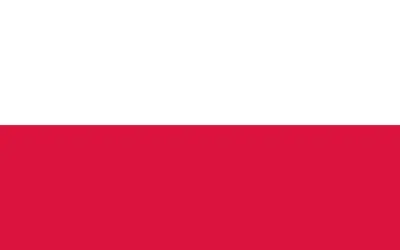
Poland, officially the Republic of Poland, is a country in Central Europe, situated between the Baltic Sea in the north and two mountain ranges (the Sudetes and Carpathian Mountains) in the south. Bordered by Germany to the west; the Czech Republic and Slovakia to the south; Ukraine and Belarus to the east; and the Baltic Sea, Kaliningrad Oblast (a Russian exclave) and Lithuania to the north. The total area of Poland is 312,679 square kilometres (120,726 sq mi), making it the 69th largest country in the world and the 9th largest in Europe. With a population of over 38.5 million people, Poland is the 34th most populous country in the world, the 8th most populous country in Europe and the sixth most populous member of the European Union, as well as the most populous post-communist member of the European Union. Poland is a unitary state divided into 16 administrative subdivisions and its capital and largest city is Warsaw. Other metropolises include Kraków, Wrocław, Poznań, Gdańsk and Szczecin. The country's largest agglomeration is the Silesian Metropolis.
