REXFORD TUGWELL
(Rexford Guy Tugwell)
The term “rugged individualism” was used at the time be very conservatives and the very wealthy to describe business leladers with words that had very good public connotations. They argued that it would be undesirable to curtail their individualism that was so important by any government regulations or laws that would limit what the business leaders could do. However, the reality was that these very successful and powerful “rugged individualists” had regimented most everyone else—employees, consumers, and small businessmen who might sell them services or products. To Tugwell, if the wealthy and powerful few had no restrictions on their individualism, there would be precious little individualism for most of society. He sought a balance of regulating the individualism and prerogatives of the few somewhat in order to allow the vast majority of people to be able to have individuality as well.
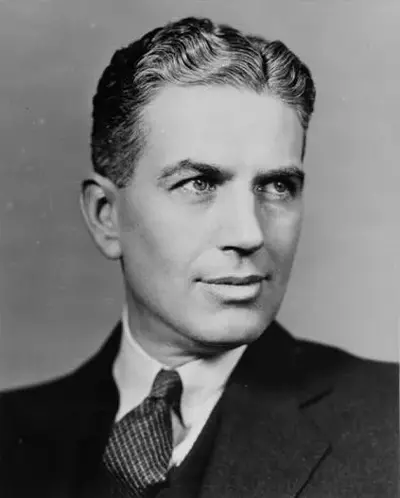
Rexford Guy Tugwell was an economist who became part of Franklin D. Roosevelt's first "Brain Trust", a group of Columbia University academics who helped develop policy recommendations leading up to Roosevelt's New Deal. Tugwell served in FDR's administration until he was forced out in 1936. He was a specialist on planning and believed the government should have large-scale plans to move the economy out of the Great Depression because private businesses were too frozen in place to do the job. He helped design the New Deal farm program and the Resettlement Administration that moved subsistence farmers into small rented farms under close supervision. His ideas on suburban planning resulted in the construction of Greenbelt, Maryland, with low-cost rents for relief families. He was denounced by conservatives for advocating state-directed economic planning to overcome the Great Depression.
