Richard Harding Davis Quotes
The Newspaper wants me to by neutral with respect to Germany, as if anyone could be neutral in this war.


This is the quotation that came to define Chamberlain’s naivety for history and the icon of failed diplomacy. However to see the beginning of the sequence of events that would lead up to this statement, see {585940} when Chamberlain suggested the infamous meeting in Munich. There had been an interesting history to Chamberlain’s appeasement of Germany. 39 years earlier, Chamberlain’s father, then Britain’s Colonial Secretary, and advocated a natural alliance with Germany. See Joseph Chamberlain, 1836-1914: {585939}.

Chamberlain’s policy was to appease Hitler and Germany to avoid war. Although he did not see Czechoslavkia as a critical British national interest and claimed he had secured peace {585941} , the reality was that he gave Germany room to start its aggression which would engulf all of Europe and much of the world. The British became the only bulwark against Hitler until the Russians stopped the Germans and America entered the war.


He was exactly right. Two decades later Germany had started WWII.


Germany had demanded that Belgium allow German troops to cross Belgium to the French frontier. However, King Albert was concerned that this would be a de facto German occupation of Belgium and asked for help. The British tried diplomacy but things were out of anyone’s control and the First World War ensued.


This quotation is surprising in that Mrs. Roosevelt was a leading liberal and one of the leading advocates for peace. This quotation might have been authored by a right wing conservative of the early 21st century.

At first glance, the reader might think that this quotation in a leading university newspaper was from the Vietnam War era. However, it was argument against U. S. involvement in World War II. There was a very negative reaction to Wilson’s visions and claims for the First World War which never did come to pass that stuck with many.

Some southerners had gotten out of the Confederate chain of command and were attacking civilian steamboats killing Southerners as well as “Yankees”. See {633900} . While Sherman had trouble with some of his own men on parts of his March Through Georgia, at this time, it was Southerners who were acting independently and improperly. Legally, the Confederates were responsible for any people committing terror. Sherman tried to persuade the Confederate commanders with letters like this, but was very quick to retaliate for every violation. He also complained to some Union officers that they were not moving quickly enough to retaliate and prevent future behavior--{584048}

Theodore Roosevelt was the Presidential nominee. Johnson was a leader of some members of Congress some of whom were extreme isolationists and some of whom were Nazi sympathizers and Hitler admirers. When the Japanese attacked Pearl Harbor later that year, Germany, fulfilling its treaty with Japan, declared war on America, Johnson’s group no longer mattered. Before WWII most Republicans were opposed to Defense Spending and accused the Democrats of being war hawks. After WWII, they flip flopped and became more hawkish than the Democrats who they accused of being soft on defense for years thereafter. See {631380} for President Roosevelt’s different view.


At this point, the horrors of the German concentration death camps were generally known by the world press. This quotation shows the denial that the Irish Free State was in about the German Nazi atrocities. The 6-county Nationalsits were the Irish counties in Northern Ireland that did not join the Irish Free State and so far as the Catholic Irish were concerned, the Catholics of Northern Ireland were a persecuted minority undergoing oppression and that was not they believed morally different from the murders of millions of Jews, Gypsies and handicapped people in Europe. If the Free State Irish publicly admitted the difference, they would morally have had to join the allies and De Valera was totally opposed to that. Over 70,000 Irishmen and women rejected the moral stand of their government, and volunteered for the British Army to the great distress of the Free State leaders like De Valera. See {639722} for his personal denial of reality.


The report was from Heinrich von Tschirschky, the German ambassador to Austria-Hungary. He recommended that Germany persuade Austria-Hungary to not attack Serbia, not realizing the German leaders had already planned a war with Russia and saw the issues between the Austro-Hungarian Empire and Serbia was a good excuse to implement their war plans (see {642092}).

The existing treaties of many of the different European countries like the NATO Treaty obliged them to assist their allies if they were involved in war. Once Austria attacked Serbia, Russia had to assist Serbia against Austria. Germany then joined with Austria and that triggered the treaty whereby France had to support Russia. And when Germany overran Belgium to attack France, England was obligated to come to Belgium’s defense. The only country that had planned for and wanted war was Germany who used her obligation to Austria as the excuse to implement her war plans (see {642092}). The entire Western World was at war when all but one nation wanted to avoid war. The communications and diplomacy of the time could not keep up with events and one of the worst wars in history ensued.


The Germans had comitted some terrible war crimes in Belgium at the begiining of WWI. They had torpedoed passanger ships with some Americans getting killed, Public opinion was such that Wilson worried that some atrocity by any small german detachment could pressure his administration to enter WWI to satisf American public opinion.


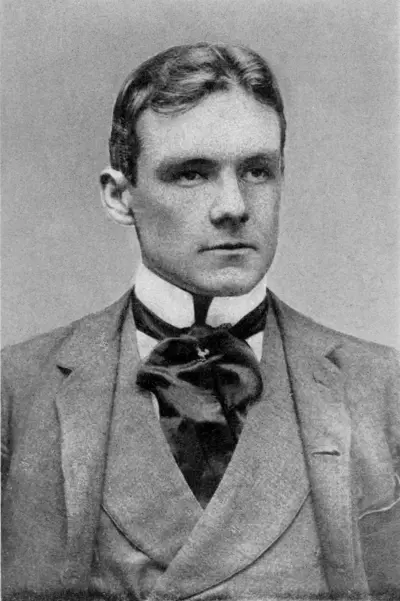
Richard Harding Davis was an American journalist and writer of fiction and drama, known foremost as the first American war correspondent to cover the Spanish–American War, the Second Boer War, and the First World War. His writing greatly assisted the political career of Theodore Roosevelt. He also played a major role in the evolution of the American magazine. His influence extended to the world of fashion, and he is credited with making the clean-shaven look popular among men at the turn of the 20th century.
