William Jennings Bryan Quotes
The first thing to understand is the difference between the natural person and the fictitious person called a corporation. They differ in the purpose for which they are created, in the strength which they possess, and in the restraints under which they act.
Bryan, William Jennings. "The Trust Question." Speeches of William Jennings Bryan, vol. 2, Funk & Wagnalls Company, 1909, p. 77.


A constant major issue in industrial democracies are the perceptions, rights and responsibilities of corporations. For those like Romney, corporations should have all the privileges, empathy, rights and obligations of individual people. To most others a corporation is morally and practically a different entity. See {586119}.
Romney was trying to explain that the Supreme Court had recently ruled that for purposes of placing limits on campaign donations, corporations were entitled to the same rights of free speech and contributing money as people. The candidate chose this statement to express that view. However, the way Romney phrased it made many people suspect that perhaps, because of his lifetime corporate activity, he really thought that there were no differences between corporations and people. This suspicion reinforced a public feeling that Romney was much more corporately oriented than he was people oriented, and that hurt Romney with many voters.

This issue arose in 2014 with the Citizens United Case, when a 5-4 decision of the Supreme Court held that political contributions were a form of political speech and corporations had the right of Freedom of Speech. This time there were 4 dissenters.


The state of Texas had an enthusiasm for executions that was greater than and different from all the other states. Their execution numbers were closer to Iran and China than they were to other American states. The Supreme Court had ruled that corporations were people for purposes of being entitled to freedom of speech.


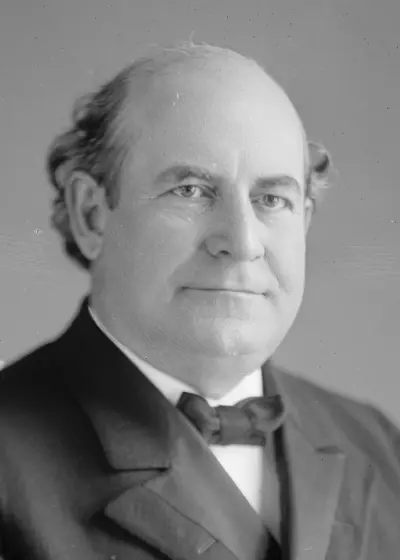
William Jennings Bryan was an American orator and politician from Illinois and Nebraska. Beginning in 1896, he emerged as a dominant force in the Democratic Party, running three times as the party's nominee for President of the United States in the 1896, 1900, and 1908 elections. He also served in the United States House of Representatives and as the United States Secretary of State under Woodrow Wilson. Because of his faith in the wisdom of the common people, he was often called "The Great Commoner".
