Jerry Brown Quotes
The corporation is not a person; it is a legal fiction backed up by guns and police and jail cells and taxing authorities and the regulators called government.
Brown, Jerry. Dialogues. Berkeley Hills Books, 1998, p. 82.

A constant major issue in industrial democracies are the perceptions, rights and responsibilities of corporations. For those like Romney, corporations should have all the privileges, empathy, rights and obligations of individual people. To most others a corporation is morally and practically a different entity. See {586119}.


Romney was trying to explain that the Supreme Court had recently ruled that for purposes of placing limits on campaign donations, corporations were entitled to the same rights of free speech and contributing money as people. The candidate chose this statement to express that view. However, the way Romney phrased it made many people suspect that perhaps, because of his lifetime corporate activity, he really thought that there were no differences between corporations and people. This suspicion reinforced a public feeling that Romney was much more corporately oriented than he was people oriented, and that hurt Romney with many voters.


McCain held this view despite the fact that most other politicians of his party supported removal of any corporate restraints.


This issue arose in 2014 with the Citizens United Case, when a 5-4 decision of the Supreme Court held that political contributions were a form of political speech and corporations had the right of Freedom of Speech. This time there were 4 dissenters.


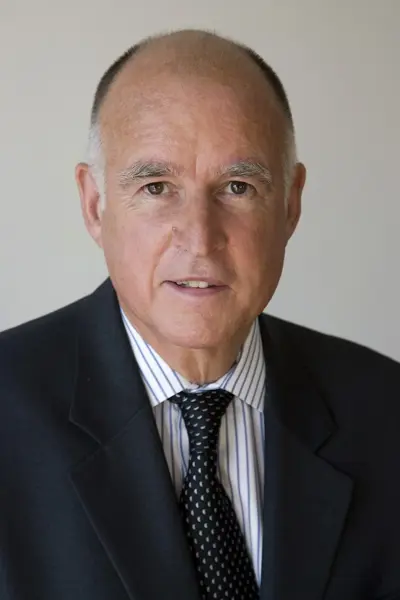
Edmund Gerald Brown Jr. is an American lawyer and politician who served as the 34th and 39th governor of California from 1975 to 1983 and 2011 to 2019. A member of the Democratic Party, he was elected Secretary of State of California in the early 1970s; Brown later served as Mayor of Oakland from 1999 to 2007 and Attorney General of California from 2007 to 2011. He was both the oldest and sixth-youngest governor of California due to the 28-year gap between his second and third terms. Upon completing his fourth term in office, Brown became the third longest-serving governor in U.S. history, serving 16 years and 5 days in office.
