John Archibald Campbell Quotes
A corporation is not a citizen. It may be an artificial person, a moral person, a juridical person, a legal entity, a faculty, an intangible, invisible being…. it certainly is not a citizen.
This issue arose in 2014 with the Citizens United Case, when a 5-4 decision of the Supreme Court held that political contributions were a form of political speech and corporations had the right of Freedom of Speech. This time there were 4 dissenters.
John Archibald Campbell, 1811–1889, U. S. Supreme Court Justice, Alexander J. Marshall, Plaintiff In Error, v. The Baltimore And Ohio Railroad Company., Dissent, 1846
Sourced by: Eigen's Political and Historical Quotations

The segment to which he referred were corporations. In his view, the then existing limits on corporate contributions to political campaigns were a “muffling” of the most experienced economic operatives in our society—corporations. Therefore this was censorship of the corporation’s right to freedom of speech. So in his view, in addition to the rights that were abrogated the nation was being blocked from receiving the political voice of one of its best sources of experience and wisdom regarding economic matters. The Supreme Court with the George W. Bush appointees became much more conservative and a few years later, with Scalia leading the charge, the court overruled itself and all its precedents and decided that Corporations were entitled to free speech. See {642321} for an earlier Supreme Court view that corporations were not entitled to the protection of citizens. This Scalia statement was quoted by fellow Supreme Court justice Anthony Kennedy in one of his opinions.

A constant major issue in industrial democracies are the perceptions, rights and responsibilities of corporations. For those like Romney, corporations should have all the privileges, empathy, rights and obligations of individual people. To most others a corporation is morally and practically a different entity. See {586119}.

McCain held this view despite the fact that most other politicians of his party supported removal of any corporate restraints.
Romney was trying to explain that the Supreme Court had recently ruled that for purposes of placing limits on campaign donations, corporations were entitled to the same rights of free speech and contributing money as people. The candidate chose this statement to express that view. However, the way Romney phrased it made many people suspect that perhaps, because of his lifetime corporate activity, he really thought that there were no differences between corporations and people. This suspicion reinforced a public feeling that Romney was much more corporately oriented than he was people oriented, and that hurt Romney with many voters.


The Citizens United case held that it was unconstitutional to limit the amount of money that corporations could spend political campaigns.


This quotation is a good example of the hair splitting that is often required in deciding constitutional law.

conservative justices in the majority McCain held this view despite the fact that most other politicians applauded the decision since the large, wealthy corporations tended to support Republicans.

“Lay-Away” is a term and concept that was widely used in before the ear of credit cards. Consumers would make a “down payment” on the merchandise they wanted to buy. The store would “lay it away” (store it) until the consumer came up with the money to pay for the entire sale and then he/she would get the use of the merchandise. But while on “lay-away” the consumer could not get the benefit of what he/she had bought.


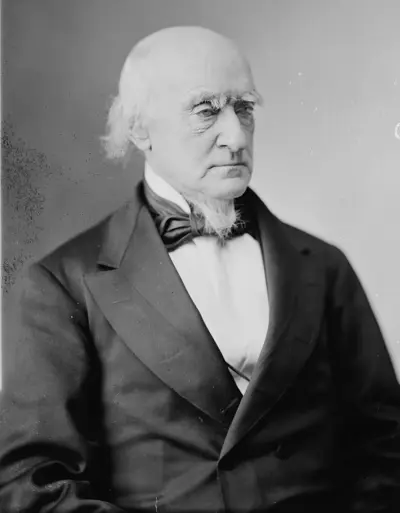
- Born: June 24, 1811
- Died: March 12, 1889
- Nationality:
- Profession:
John Archibald Campbell was an American jurist. He was a successful lawyer in Georgia and Alabama, where he served in the state legislatures. Appointed by Franklin Pierce to the United States Supreme Court in 1853, he served until the outbreak of the American Civil War, when he became an official of the Confederate States of America. After serving six months in a military prison, he resumed a successful law practice in New Orleans, where he opposed Reconstruction.
