John Paul Stevens Quotes
It might be added that corporations have no consciences, no beliefs, no feelings, no thoughts, no desires. Corporations help structure and facilitate the activities of human beings, to be sure, and their ‘personhood’ often serves as a useful legal fiction. But they are not themselves members of ‘We the People’ by whom and for whom our Constitution was established.
Stevens, John Paul. Citizens United v. Federal Election Commission, 558 U.S. 310, Supreme Court of the United States, 21 Jan. 2010, p. 466.


A constant major issue in industrial democracies are the perceptions, rights and responsibilities of corporations. For those like Romney, corporations should have all the privileges, empathy, rights and obligations of individual people. To most others a corporation is morally and practically a different entity. See {586119}.

Romney was trying to explain that the Supreme Court had recently ruled that for purposes of placing limits on campaign donations, corporations were entitled to the same rights of free speech and contributing money as people. The candidate chose this statement to express that view. However, the way Romney phrased it made many people suspect that perhaps, because of his lifetime corporate activity, he really thought that there were no differences between corporations and people. This suspicion reinforced a public feeling that Romney was much more corporately oriented than he was people oriented, and that hurt Romney with many voters.


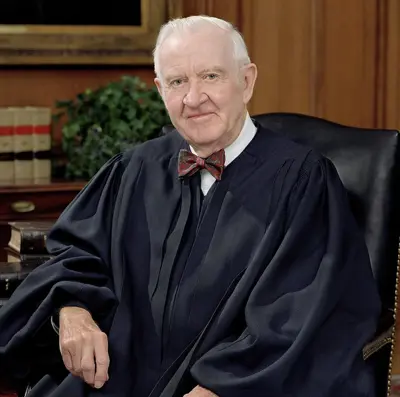
John Paul Stevens was an American lawyer and jurist who served as an associate justice of the United States Supreme Court from 1975 until his voluntary retirement in 2010. At the time of his retirement, he was the second-oldest-serving justice in the history of the court and the third-longest-serving justice. At the time of his death, he was the longest lived Supreme Court justice ever. His long tenure saw him write for the court on most issues of American law, including civil liberties, death penalty, government action and intellectual property. In cases involving presidents of the United States, he wrote for the court that they were to be held accountable under American law. A registered Republican when appointed who throughout his life identified as a conservative, Stevens was considered to have been on the liberal side of the court at the time of his retirement.
