George Mason Quotes
Slavery discourages arts and manufactures.
Mason, George. Address to the Constitutional Convention. 22 Aug. 1787. The Records of the Federal Convention of 1787, edited by Max Farrand, vol. 2, Yale University Press, 1911, p. 370.


This was written under the name of Ragnar Redbeard. There are a few scholars who believe that it was written by Jack London, but most credit Desmond.

No sooner had Georgia Banned slavery, then some of the large planters petitioned the trustees for a reversal of the ban on the grounds that South Carolina, their neighboring colony allowed planters to use slaves and this put the Georgia planters at a major competitive disadvantage. Oglethorpe won the battle but later lost the war as the ban was overturned and Georgia became one of the worst slave states. What is interesting about this quotation is that in addition to his pragmatic reasons for banning slavery, he was morally offended but the notion and method of chattel slavery and the slave trade. See Quotes 643524 and 643525.


The “lords of the lash” were the Southern slave owners. The “lords of the loom” were the Northern mill owners. The Southern cotton, grown by cheap slave labor was sold to the Northern mill owners at very low prices. They in turn wove the cotton into cloth and sold it throughout the nation and to foreign countries. So, although there was strong Northern anti-slavery sentiment, the wealthy and politically powerful mill owners had a vested interest in maintaining slavery in the South.

The cotton industry and slavery were a very important part of the economy of Providence, RI. The Rhode Island cotton mills were supplied by Southern cotton produced by slaves and carried from the South on Rhode Island ships. Many of the southern slaves were kidnapped from Africa from Rhode Island slave trading ships. When the slave trade was made illegal, Brown was the first slave trader prosecuted. His brother, Moses Brown, a vehement abolitionist was one of the men who brought the prosecution.

The Southeastern states were in a triple bind regarding slavery. The slave trade was ended so new slaves could not be imported. The existing slaves commanded much higher prices in the West and were sold to those destinations. Meanwhile, the European abject poverty provided a ready source of immigrants who would work for wages that were not much more than the cost of keeping and amortizing a slave. At the beginning of the Civil War, the death knell of Southeastern slavery had already been ringing.
Most of us think the California was not a slave state, but in the early 1850s the California law (such as it was) allowed a slave owner to “sojourn” in California with his property that could include slaves. A number of Southern save owners took slaves to the California gold fields to do mining. There was a great deal of resentment on the part of the other miners and the free labor of the territory. In 1855, slavery in California was abolished.
The polygamy referred to the Mormons.

Many of the Americans captured by the Islamic Barbary pirates in the years leading up to the Barbary War were sold into slavery. Eaton, who was the American consul at Tunis, couldn’t help but notice the tragic parallel between the suffering of those captured by the pirates and slaves in the American South.

This is one of the major reasons that Slavery was so hard to end in the South. At the time, the dollar value of the Southern slaves was greater than the value of all the land, factories, inventory, and capital equipment of the South. Slaves were not only capital, they were the largest component of Southern capital and Southern wealth. There were numerous ideas of paying slave owners for the freedom of their slaves, and if this was done, it would have been far less expensive in money alone than the Civil War cost. However, the Southern leadership, like Fitzhugh, were totally intransient with culture and customs—indeed the Southern concept of manhood—was dependent in Slavery. The result was that no compensation was paid to slave owners and the South was impoverished as a result of its capital loss and it would not recover for 150 years.


The Mormons were in Missouri at the time. Phelps was warning the church members essentially not to get involved with the slavery issue. The Mormon Church tended to support the institution of slavery at that time although Mormons themselves did not own slaves. However, we should remember that the Mormons themselves were a very persecuted group and Phelps and other Church leaders probably didn’t want their members alienating the non Mormons more than they already did by their existence. This was very similar to the Roman Catholic Church leaders at the time. The Catholics were also a persecuted minority and the Catholic Bishops often supported slavery—especially in the South to try and avoid hostility from the power structure and the majority. Some individual Mormons and individual Catholics were much opposed to slavery. See {629158} and {629154} for more on the Mormons and slavery. Later, Smith altered his early view.


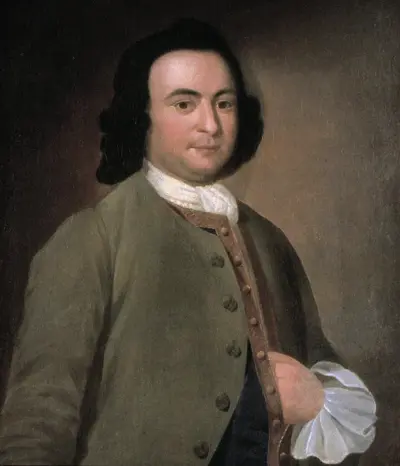
George Mason IV was an American planter, politician and delegate to the U.S. Constitutional Convention of 1787, one of three delegates who refused to sign the Constitution. His writings, including substantial portions of the Fairfax Resolves of 1774, the Virginia Declaration of Rights of 1776, and his Objections to this Constitution of Government (1787) opposing ratification, have exercised a significant influence on American political thought and events. The Virginia Declaration of Rights, which Mason principally authored, served as a basis for the United States Bill of Rights, a document of which he has been deemed a father.
