Robert Fogel Quotes
The first, and overarching, count in the new indictment is that slavery permitted one group of people to exercise unrestrained personal domination over another group of people.
Fogel, Robert William. Without Consent or Contract: The Rise and Fall of American Slavery. W. W. Norton & Company, 1989, p. 394.


As a result of the programs and philosophy he expounded, Leontiev joyously predicted:


The “lords of the lash” were the Southern slave owners. The “lords of the loom” were the Northern mill owners. The Southern cotton, grown by cheap slave labor was sold to the Northern mill owners at very low prices. They in turn wove the cotton into cloth and sold it throughout the nation and to foreign countries. So, although there was strong Northern anti-slavery sentiment, the wealthy and politically powerful mill owners had a vested interest in maintaining slavery in the South.

Referring to the Arawak natives he found when he landed in the "new world—San Salvador:"

Referring to Black Congressman Julian Bond: Louis Eugene Walcott

The polygamy referred to the Mormons.

Miller was the first Black American admitted to a Graduate Program—Johns Hopkins—in Mathematics

Abd al-Rahman Ibn Mohammad. He is generally regarded to be the World’s first social scientist. The largest statue in Tunisia of not of a military leader of king, but of this social scientist.

The Republican Party condemned polygamy and slavery in its party platform of 1856

Brown was the richest man in Rhode Island and made much of his money in the slave trade. This quotation shows that slavery was not completely a North verses South split. Northerners like Brown for whose family Brown University was named, was as virulent supporter of slavery as the most ardent Southerner.
This was written under the name of Ragnar Redbeard. There are a few scholars who believe that it was written by Jack London, but most credit Desmond.

This is one of the major reasons that Slavery was so hard to end in the South. At the time, the dollar value of the Southern slaves was greater than the value of all the land, factories, inventory, and capital equipment of the South. Slaves were not only capital, they were the largest component of Southern capital and Southern wealth. There were numerous ideas of paying slave owners for the freedom of their slaves, and if this was done, it would have been far less expensive in money alone than the Civil War cost. However, the Southern leadership, like Fitzhugh, were totally intransient with culture and customs—indeed the Southern concept of manhood—was dependent in Slavery. The result was that no compensation was paid to slave owners and the South was impoverished as a result of its capital loss and it would not recover for 150 years.


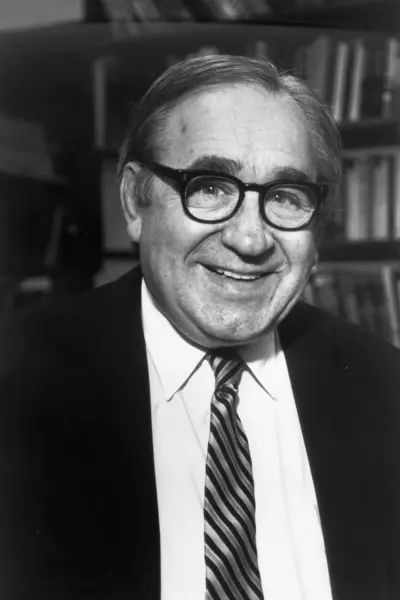
Robert William Fogel was an American economic historian and scientist, and winner (with Douglass North) of the 1993 Nobel Memorial Prize in Economic Sciences. As of his death, he was the Charles R. Walgreen Distinguished Service Professor of American Institutions and director of the Center for Population Economics (CPE) at the University of Chicago's Booth School of Business. He is best known as an advocate of new economic history (cliometrics) – the use of quantitative methods in history.
