Frederick Douglass Quotes
Slaves are generally expected to sing as well as to work.
Douglass, Frederick. My Bondage and My Freedom. Miller, Orton & Mulligan, 1855, p. 97.

Referring to Black Congressman Julian Bond: Louis Eugene Walcott


Indian and Black slaves were outlawed very early in Connecticut, not on moral grounds of concern for the Indians and Blacks, but because of the negative effects on the white poor. Why would anyone pay the poor any more than the amortization costs of a slave? Therefore there was no way a poor white could make a living wage if slavery were to coexist.

The cotton industry and slavery were a very important part of the economy of Providence, RI. The Rhode Island cotton mills were supplied by Southern cotton produced by slaves and carried from the South on Rhode Island ships. Many of the southern slaves were kidnapped from Africa from Rhode Island slave trading ships. When the slave trade was made illegal, Brown was the first slave trader prosecuted. His brother, Moses Brown, a vehement abolitionist was one of the men who brought the prosecution.

This is one of the major reasons that Slavery was so hard to end in the South. At the time, the dollar value of the Southern slaves was greater than the value of all the land, factories, inventory, and capital equipment of the South. Slaves were not only capital, they were the largest component of Southern capital and Southern wealth. There were numerous ideas of paying slave owners for the freedom of their slaves, and if this was done, it would have been far less expensive in money alone than the Civil War cost. However, the Southern leadership, like Fitzhugh, were totally intransient with culture and customs—indeed the Southern concept of manhood—was dependent in Slavery. The result was that no compensation was paid to slave owners and the South was impoverished as a result of its capital loss and it would not recover for 150 years.

Generally, Jefferson was not in favor of whipping slaves, but this quotation shows that he essentially accepted the basic principles of Southern Slavery—including the one that says if the person does not want to work for you, you may whip, beat, or torture him or her to produce “reasonable work.” This acceptance of slavery and profiting from it, is the terrible blot on the record of the man who otherwise was among the few greatest of Americans.


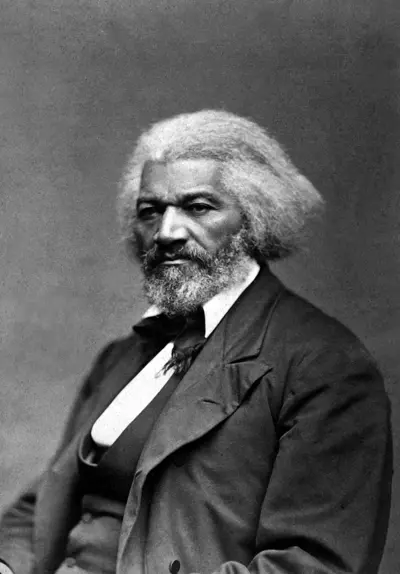
Frederick Douglass was an American social reformer, abolitionist, orator, writer, and statesman. After escaping from slavery in Maryland, he became a national leader of the abolitionist movement in Massachusetts and New York, becoming famous for his oratory and incisive antislavery writings. Accordingly, he was described by abolitionists in his time as a living counterexample to slaveholders' arguments that slaves lacked the intellectual capacity to function as independent American citizens. Likewise, Northerners at the time found it hard to believe that such a great orator had once been a slave.
