Harriet Jacobs Quotes
The secrets of slavery are concealed like those of the Inquisition.
Jacobs, Harriet A. Incidents in the Life of a Slave Girl. Published for the Author, 1861, p. 53.


As a result of the programs and philosophy he expounded, Leontiev joyously predicted:

Referring to Black Congressman Julian Bond: Louis Eugene Walcott
Toward the end of the 19th century Cambodia became a protectorate of France. One of the first things that the French did was abolish slavery. There was a general rebellion as few in Khmer society wanted change of any kind.


The sexual exploitation of female slaves by the slave owner and/or his relatives was a phenomenon about which most Southerners were in denial. Light skinned and even white babies, born to Negro slaves was fairly common. The gross immorality was so great that it was too painful for most Southerners – especially white females to even contemplate much less discuss. At the same time, the abolitionists had to be very careful that to raise this problem as delicately as possible lest the lost their audience with such gross and indelicate behavior. This quotation was particularly artfully phrased.
John Sutter was an immigrant to California from Switzerland where he became a Mexican citizen. Slavery was outlawed in Mexico and its territories, yet Sutter and others maintained Indians as slaves. The Roman Catholic Missions of California also kept Indian slaves. This quotation is historically important because many people never realized that slavery was prevalent in California.


Generally, Jefferson was not in favor of whipping slaves, but this quotation shows that he essentially accepted the basic principles of Southern Slavery—including the one that says if the person does not want to work for you, you may whip, beat, or torture him or her to produce “reasonable work.” This acceptance of slavery and profiting from it, is the terrible blot on the record of the man who otherwise was among the few greatest of Americans.

Miller was the first Black American admitted to a Graduate Program—Johns Hopkins—in Mathematics


This is one of the major reasons that Slavery was so hard to end in the South. At the time, the dollar value of the Southern slaves was greater than the value of all the land, factories, inventory, and capital equipment of the South. Slaves were not only capital, they were the largest component of Southern capital and Southern wealth. There were numerous ideas of paying slave owners for the freedom of their slaves, and if this was done, it would have been far less expensive in money alone than the Civil War cost. However, the Southern leadership, like Fitzhugh, were totally intransient with culture and customs—indeed the Southern concept of manhood—was dependent in Slavery. The result was that no compensation was paid to slave owners and the South was impoverished as a result of its capital loss and it would not recover for 150 years.

Referring to the Arawak natives he found when he landed in the "new world—San Salvador:"


The Chinese laborers were slaves by most definitions of the word as they had been brought to South Africa on a system of indentured servitude. Slavery was illegal so the term had all kinds of political and legal significance. His statement was a masterpiece of admitting that it was almost slavery but leaving some wiggle room so as not to have classified it as such. Some use this as an example of Churchill’s capacity for hypocrisy.

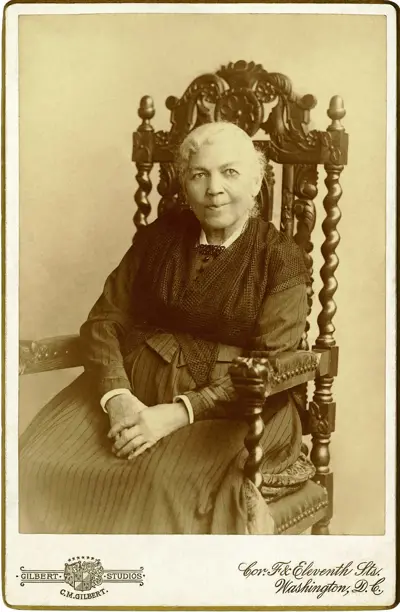
Harriet Jacobs was an African-American writer, whose autobiography, Incidents in the Life of a Slave Girl, published in 1861 under the pseudonym Linda Brent, is now considered an "American classic". Born into slavery in Edenton, North Carolina, she was sexually harassed by her enslaver. When he threatened to sell her children if she did not submit to his desire, she hid in a tiny crawl space under the roof of her grandmother's house, so low she could not stand up in it. After staying there for seven years, she finally managed to escape to the free North, where she was reunited with her children Joseph and Louisa Matilda and her brother John S. Jacobs. She found work as a nanny and got into contact with abolitionist and feminist reformers. Even in New York, her freedom was in danger until her employer was able to pay off her legal owner.
