Fannie Lou Hamer Quotes
I had to leave, and my husband was forced to stay on this plantation until after the harvest season was over. And then the man that we had worked for, he'd taken the car, and the most of the few things we had had been stolen.
Hamer, Fannie Lou. To Praise Our Bridges: An Autobiography. Edited by Julius Lester, KIPCO, 1967.


Indian and Black slaves were outlawed very early in Connecticut, not on moral grounds of concern for the Indians and Blacks, but because of the negative effects on the white poor. Why would anyone pay the poor any more than the amortization costs of a slave? Therefore there was no way a poor white could make a living wage if slavery were to coexist.


This was written under the name of Ragnar Redbeard. There are a few scholars who believe that it was written by Jack London, but most credit Desmond.


The “lords of the lash” were the Southern slave owners. The “lords of the loom” were the Northern mill owners. The Southern cotton, grown by cheap slave labor was sold to the Northern mill owners at very low prices. They in turn wove the cotton into cloth and sold it throughout the nation and to foreign countries. So, although there was strong Northern anti-slavery sentiment, the wealthy and politically powerful mill owners had a vested interest in maintaining slavery in the South.

Abd al-Rahman Ibn Mohammad. He is generally regarded to be the World’s first social scientist. The largest statue in Tunisia of not of a military leader of king, but of this social scientist.

The polygamy referred to the Mormons.

This is one of the major reasons that Slavery was so hard to end in the South. At the time, the dollar value of the Southern slaves was greater than the value of all the land, factories, inventory, and capital equipment of the South. Slaves were not only capital, they were the largest component of Southern capital and Southern wealth. There were numerous ideas of paying slave owners for the freedom of their slaves, and if this was done, it would have been far less expensive in money alone than the Civil War cost. However, the Southern leadership, like Fitzhugh, were totally intransient with culture and customs—indeed the Southern concept of manhood—was dependent in Slavery. The result was that no compensation was paid to slave owners and the South was impoverished as a result of its capital loss and it would not recover for 150 years.

Brown was the richest man in Rhode Island and made much of his money in the slave trade. This quotation shows that slavery was not completely a North verses South split. Northerners like Brown for whose family Brown University was named, was as virulent supporter of slavery as the most ardent Southerner.


Both nations’ colonies were amongst the cruelest in human history with huge numbers of black Africans murdered and mutilated if they would not work in the mines for terrible wages or spoke against the brutal colonial rule.
Clark, after becoming one of the richest men in America, wanted to go into National Politics, but most people hated him so he could never win elected office. At the time, Montana selected their Senators by a vote of the State Legislature. So Clark bribed enough members of the legislature to become the Senator. However, the bribery scheme became a public scandal and the Senate refused to seat him. So the legislature had another vote in the next legislative session and Clark won again, and that time no one had the evidence of the bribes. But then, more about Clark became known, and he just served the one term.


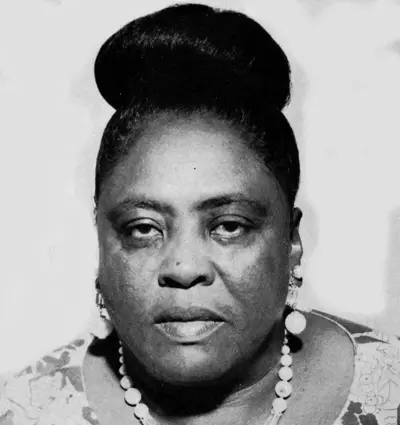
Fannie Lou Hamer was an American voting and women's rights activist, community organizer, and a leader in the civil rights movement. She was the co-founder and vice-chair of the Freedom Democratic Party, which she represented at the 1964 Democratic National Convention. Hamer also organized Mississippi's Freedom Summer along with the Student Nonviolent Coordinating Committee (SNCC). She was also a co-founder of the National Women's Political Caucus, an organization created to recruit, train, and support women of all races who wish to seek election to government office.
