William E. Jenner Quotes
Outwardly we have a Constitutional government. We have operating within our government and political system, another body representing another form of government, a bureaucratic elite which believes our Constitution is outmoded
Note Jenner’s paranoia of an “invisible government”. In the 20th century there were several left wing and right wing conspiracy theories held by the party extremists. This was one of the right wing conspiracy theories. There have been individual members of the US Government—appointees and Civil Servants--, who have been spies and extremists who did not believe in the Constitution. Some of these have been covert and others overt as in the George W, Bush administration where there were a few officials who believed that officials could torture when it was against the law. At no point were these many and in most cases—especially with spies—they never knew each other or communicated. They certainly never could be reasonably be called an “invisible government.” However some extreme leftists have believed that there was a cabal of wealthy men—right wing extremists--who operated such an invisible government. Likewise, there were rightist politicians who believed erroneously that there was such an invisible government implementing Communistic policies. From the 1930s through the 21st century, there were some racists—usually Southerners—who saw all government officials who supported racial equality and integration as Communists and anti-Constitutionalists forming a secret government to racially integrate the country. Those officials were generally not invisible at all, and it was their overt support for an end to racism that made them “subversive.”
William E. Jenner, 1908-1985, U. S. Senator (Republican, IN), 1954
Sourced by: Eigen's Political and Historical Quotations


Donovan had been criticized for utilizing "leftists" for intelligence activities. Precursor to CIA. Donavan was a prominant attorney, banker and financier as well as a Medal of Honor Winner when he was asked to organzie the OSS. America was far behind the axis and even our allies in spy craft. J Edgar Hoover focused the FBI on leftists and had veritually no capability for spying in Western Europe and Asia. Donavan's OSS produced almost all of the actionable intelligence and did a wonderful job in organziaing covert operations. He used people who would normally never be considered by an espionage agency including many scholars, intellectuals, scientists, and entertainers. His agents ranged from Julia Child, the gourmet chef. to Moe Berg, a New York Yankee Baseball Player who spoke many languages. Hoover and some if the military intelligence agencies were jealous of his success and his access to President Roosevelt, and complained about anything they could find and hisi agents were an easy target for their wealth, societal connections, sexual indescretions, liberal politics, Bohemians, upper class right wing politics and culture. None of thus phased Donavan. After the war and FDR's death, Donavan's enemies got the OSS disbanded. Soon, something was needed, and the CIA was organized along the lines of Donavan's recommendations.


The version of the Constitution they were debating did not include the Bill of Rights.


The Red Scare was the exaggerated, and somewhat irrational fear of communists and communism. A lesser used term is “Brown Scare” named for the Fascist Brownshirts thugs in several nations. It was an exaggerated and somewhat irrational fear of extreme right wingers and Fascists. It too has been a factor in American politics, but not to the same extent as the red scares.


This is an interesting historical quotation in that the same political environment existed in the first two decades of the 21st century. She was in particular referring to the slander that was commonly used by her fellow Republican, Senator Joseph P. McCarthy in his demagoguery. She was the first member of the Senate to Condemn McCarthy for his abuse and lies. Led by her example, the other senators got over their fear of McCarthy attacking them and the Senate Censured the Demagogue.

The military security people were so used to ferreting out communists in the 1930s that they had a hard time adjusting to the fact that the security risks or people who might have German connections or backgrounds. Many immigrant scientists were recruited for work on the Manhattan project to build the atomic bomb and they only did security clearances. The military security people kept checking on any communist background they might have had as opposed to possible connections with fascist organizations. By the end of the war they had adjusted but then had to go back to looking for communists as the Cold War evolved.

There was a small but virulent movement of fascistic right wingers who formed secret alliances with other groups to keep America from aiding England in defending against the Nazis and to stop the Roosevelt New Deal. Senior military officers were recruited for extra legal activities including a possible takeover of the government. Some Charismatic Catholic and Protestant demagogues were leading these movements and many churches spoke out against these potentially unconstitutional revolutionary activities. This was one of the clearest statements of patriotism.


Seeger had been a member of the Communist Party and had left it in 1950. See {635866}. He was later called before the House UnAmerican Activities Committee and asked to reveal the names of others who had been members. In those days of the red scare and McCarthyism, most people asked to name names and not wanting to do so “took the 5th Amendment” and could not be legally forced to reveal the names. Seeger as a matter of principle refused to plead the 5th Amendment because he was not afraid of incriminating himself and had done nothing criminal anyway. So he, a war veteran of WWII, instead refused to answer citing his First Amendment right of freedom of association. There was no legal precedent for this, and he was indicted and convicted for Contempt of Congress. However, his conviction was overturned as unconstitutional by the U. S. Federal Appeals court. Seeger had prevailed legally. But in retaliation Seeger was blacklisted and none of the radio of TV networks or Hollywood Studios would allow him (and other blacklisted artists) to appear. See {642545} Today most Americans view what McCarthy, The Congressional Committee, the networks, and Hollywood studios had done as contemptible.

The Fascist Dictator hinted at all the Church property that the State might seize and began to place taxes on the Church and in a brilliant political stroke actually negotiated the Lateran Pacts of 1929 with the Church whereby the Dictator would guarantee all the churches property and protect its officials end exempt the church from taxation and all the Church had to do was have all their Italian Bishops swear to this oath of political support for the dictatorial fascist state and its outrages and aggression and denial of rights. He actually have the church more religious power than they had enjoyed in Italy for years. For example he turned over the public school curriculum to the church with no other religion considered. Despite thus oath of the Italian bishops, there were a number of individual Catholic priests who aided the anti-Fascist resistance, but for the most part Mussolini bought the political and moral support of the Catholic Church. Apologists for the Church at the time point out that the entire Vatican and the Pope was totally within the dictator’s span of control, and he could jail any of the Holy see who criticized him or have them executed as he did so many others. He could also loot the Vatican and sell off holy relics and other object to finance his wars of aggression and his alliance with Hitler. They argue that there was nothing any priests could say that would break the iron hold Mussolini had on Italy and at least, the priests could perform their pastoral functions so long as they supported the Fascists. The debate continues to this day. However, after WWII Italians left the Catholic Church in droves and it is one of the least religious states in Europe.

This quotation illustrates one end of the range of union leadership regarding communism. Some union leader were communists; some were pro Marxist but against the Russian style of dictatorial communism. Others did not care for Communism at all but saw the communists as an effective tool that really frightened American corporate management and politicians so they looked reasonable by comparison and they therefore wanted the communists around. Last were those like Reuther who was aggressively anti-communist and wanted labor to expel them whenever they turn up. However, what is ironic is that Reuther himself was labeled a Communist by many right wingers who also used Reuther’s “duck” test. Reuther wanted a national health insurance system; so did the Communists. He advocated and end to segregation; so did the Communists. He fought for workers having a say in management, a classic communist demand, and many other similarities.


This was the case where the Supreme Court reversed its earlier opinion and declared the Income Tax Unconstitutional.
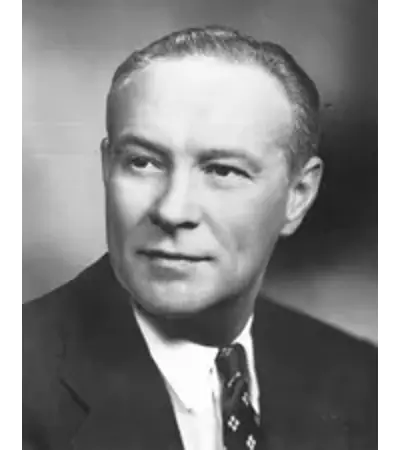
William Ezra Jenner was an American lawyer and politician from the state of Indiana. A Republican, Jenner was an Indiana state senator from 1934 to 1942, and a U.S. Senator from 1944 to 1945 and again from 1947 to 1959. In the Senate, Jenner was a supporter of McCarthyism.
