David O. McKay Quotes
Latter-day Saints should have nothing to do with secret combinations and groups antagonistic to the constitutional law of the land.
There was a small but virulent movement of fascistic right wingers who formed secret alliances with other groups to keep America from aiding England in defending against the Nazis and to stop the Roosevelt New Deal. Senior military officers were recruited for extra legal activities including a possible takeover of the government. Some Charismatic Catholic and Protestant demagogues were leading these movements and many churches spoke out against these potentially unconstitutional revolutionary activities. This was one of the clearest statements of patriotism.
David O. McKay, 1873-1970, Ninth President of The Church of Jesus Christ of Latter-day Saints, Conference Report, October 1939
Sourced by: Eigen's Political and Historical Quotations


While Douglas and Lincoln were political opponents with little love lost between them, both were patriots. And Douglas was committed to seeing that Lincoln was inaugurated and the Union preserved, if Lincoln won the election. When Lincoln did so, Douglas traveled throughout the South trying to persuade Southerners to stay in the Union. See {584870}.


Smith and his Mormon followers had been attacked and persecuted by mobs in various communities for availing themselves of their constitutional rights to follow their own religion. In those days the governor did not have command of a national guard and had to ask the President for troops to put down a mob or insurrection. Some Governors were in sympathy with the mobs and would do nothing to protect the Mormons. Smith had written to most of the then likely Presidential candidates of both major parties asking for their position on the Mormons who were facing persecution wherever they went. None of the politicians would make any satisfactory commitments. Smith took Direct Action and became the only major religious official to have run for the Presidency of the United States until Pat Robertson tried and failed in 2000. Smith’s assassination shortly thereafter cut his run for the Presidency short before it made much headway and politically he had no chance to affect the race.

Harrison, then a young Captain, was concerned about the French, British and Spanish agents "plotting" in the United States:

This oath was required of Southern Rebels who wanted obtain amnesty from treason which they had committed by engaging in the Civil War. See {623307} for the Presidential Proclamation.

Dodd observed that FDR expanded the power of the Presidency to deal with the emergency of the Great Depression, and like most Americans hoped that these measures would succeed. The Supreme Court limited some of the power expansion to the Executive Branch, but was the start of the huge Presidential power expansion that would continue through the Cold War and the War on Terror by Presidents of both parties.

The Mormons are have become an International Church with members in almost every nation. Few religions have so explicitly advocated obedience to the civil law.


Christie was a Tory—a British supporter, but what he did that was so offensive was that he had requested that British Troops come to Maryland to control the rebellion.

The original proposal made treason and bribery the only grounds for Presidential impeachment. Mason and others argued to broaden the grounds and finally they agreed on “high crimes and misdemeanors.”


In 1932 FDR was elected president by a desperate nation in the midst of the great depression. A month before the presidential inauguration an assassin attempted to murder the President-elect, but instead fatally shot the Mayor of Chicago who was talking with Roosevelt:


The comment was prompted by FDR’s attempt to “pack” the Supreme Court.

In his Senate confirmation hearings Frankfurter was repeatedly asked about his association with the ACLU and his views on Communism by conservative Senator Pat McCarran:

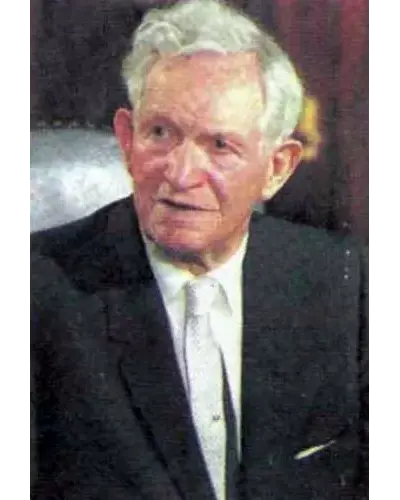
David Oman McKay was an American religious leader and educator who served as the ninth president of The Church of Jesus Christ of Latter-day Saints (LDS Church) from 1951 until his death in 1970. Ordained an apostle and member of the Quorum of the Twelve Apostles in 1906, McKay was a general authority for nearly 64 years, longer than anyone else in LDS Church history, except Eldred G. Smith (though Smith was not active as a general authority for many years).
