Melita Norwood Quotes
In general, I do not agree with spying against one's country.
Norwood, Melita. Public statement. 11 Sept. 1999. Quoted in Hoge, Warren. "Grandmother, 87, Was a Spy for Soviets, Britain Says." The New York Times, 12 Sept. 1999, p. 14.

Harrison, then a young Captain, was concerned about the French, British and Spanish agents "plotting" in the United States:


Commenting on a former CIA agent's defection to Russia:


Edward Snowden, a defense contractor and government employee, publicly revealed that the U. S. intelligence agencies were intercepting and keeping a data base of ALL telephone calls and all Internet e-mails. The government had denied that this was so, and had classified the domestic spying program as Top Secret. Snowden had signed an agreement not to reveal any classified information, and he violated the agreement. Therefore the government was trying to extradite Snowden from Russia at the time so that they could criminally prosecute him. However, there was great debate as to whether the spying on all Americans was legal and Constitutional. Many saw Snowden as a “whistleblower” and pointed out that the government which had lied wanted to prosecute Snowden for telling the truth. Fein, an attorney, was representing Snowden and his family.


In 1937 four nationalist army columns were converging on Madrid in the Spanish Civil War. General Mola was asked which column would take Madrid. His reference to the sympathizers inside the city became a universal term for traitors.


This is done in modern times. Note that the objective is NOT to arrest or execute the enemy spies but to turn them into what we call “Double Agents.”

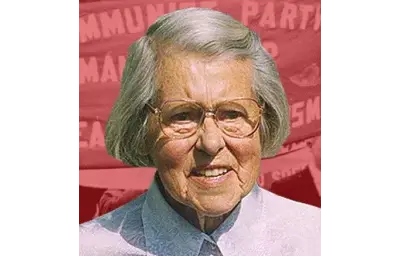
Melita Stedman Norwood (née Sirnis, 1912–2005) was a British communist, civil servant, and KGB intelligence source. She is most famous for supplying the Soviet Union (USSR) with state secrets concerning the development of atomic weapons from her job at the British Non-Ferrous Metals Research Association, where she worked for 40 years. Despite the high strategic value of the information she passed to the USSR, she refused to accept any financial rewards for her work, rejecting the USSR's offer of a pension, arguing that her actions avoided a potential conflict between the Soviet Union and Britain, America and Germany.
