Emilio Mola Quotes
The Fifth Column.
In 1937 four nationalist army columns were converging on Madrid in the Spanish Civil War. General Mola was asked which column would take Madrid. His reference to the sympathizers inside the city became a universal term for traitors.
Emilio Mola, 1887-1937, Spanish Nationalist General, Remark during the Seige of Madrid, 1936
Sourced by: Eigen's Political and Historical Quotations

Traitors and spies were their terms for Southern sympathizers in the Federal Government. Many of these would pass information to the rebels.


Commenting on a former CIA agent's defection to Russia:

Harrison, then a young Captain, was concerned about the French, British and Spanish agents "plotting" in the United States:


“Lord Haw Haw” was the name that he used in his propaganda broadcasts from Germany to England. Despite the fact that the broadcasts were anti-British and pro German, many in Britain listened to him regularly. He was very witty and many of his criticisms of British society were views held by many patriots in Britain. As pure entertainment, he was better than most of the BBC broadcasts during WWII. At the end of the war, Joyce was captured, tried and executed for treason.

Dulles was writing about the World War II Abwehr, the German intelligence service.

George W. Bush. The leak was a felony to which the elder Bush was particularly sensitive as he had served as the CIA Director. The younger Bush did not take aggressive measures to find out which of his staff had provided the unauthorized and classified information to the press.

This is done in modern times. Note that the objective is NOT to arrest or execute the enemy spies but to turn them into what we call “Double Agents.”


Before the 1968 election, President Johnson, and gotten the North Vietnam Communists to agree to Peace Talks with the U. S. and South Vietnam. Then Candidate Nixon thought that if the peace talks were ongoing and making progress, there would be more support for the Democrats and Nixon's opponent Hubert Humphrey. So Nixon secretly send a secret emissary to South Vietnamese President Nguyen Van Thieu telling him that he would not get a very good deal because President Nixon claimed that President Johnson was too eager to end the Vietnam war. He suggested that if Thieu boycotted the peace talks, then when Nixon was elected, he would guarantee a much better deal for South Vietnam and Thieu personally. President Thieu boycotted the peace talks and there could be no progress. However there is a Federal Law, the Logan Act, that makes it a felony for a private American citizen to conduct or interfere with foreign policy or negotiations with a foreign government. President Johnson found out about Nixon—s sabotage of the Peace Talks, called Nixon and threatened him with prosecution if he interfered further. LBJ had decided that with the left wing at odds with the U. S. Government over the Vietnam War, a prosecution of Nixon would cause the Right Wing to challenge the government also and the country didn—t need further polarization. He would do that only if Nixon did not heed the President—s warning. But when Nixon won the election and became President, he was terribly anxious that his pre-election crimes would be made public, and spent much of his time and staff effort trying to find out who knew about his politically self-serving felony and who might make his crime public. See {583264}.

Kahn was killed by an American Drone Strike in Yemen in 2011. Inspire Magazine was an Online Magazine Al Qaeda produced.


The woman was kidnapped from her home and shot.
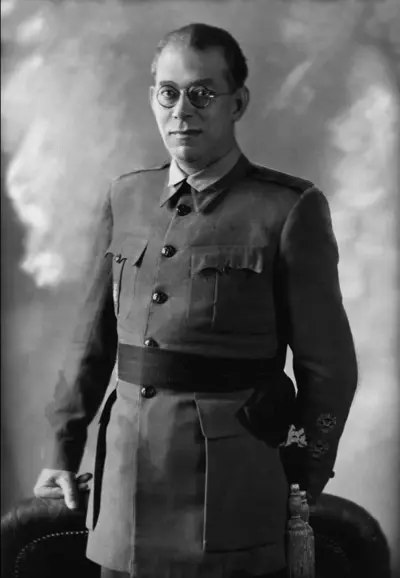
Emilio Mola y Vidal, 1st Duke of Mola, Grandee of Spain was one of the three leaders of the Nationalist coup of July 1936, which started the Spanish Civil War.
