J. Edgar Hoover Quotes
[I never implied] that President Truman was disloyal or pro-Communist. He was blind to the Communist menace and used very bad judgement.
J. Edgar Hoover, 1895-1972, Director, Federal Bureau of Investigation, 1953
Sourced by: Eigen's Political and Historical Quotations

The Red Scare had already reached most conservatives and Truman and most others had not yet been affected by the fear of Communism that so many people had through the 1970s.


Even the President was not spared during the McCarthy era. The red scare was so pervasive, that a lunatic fringe ultra right wing organization could call the President a “communist dupe” and be taken seriously be much of the media who were themselves intimidated and might be accused of being communists at any moment. It was a very low point in America’s history.


At the time, the Red Scare was prevalent and many Americans were terrified of communists. It was a very effective political tactic to imply that an opponent was a communist or communist sympathizer. For another harsh smear of Stevenson, see {619523}.

Yale University had announced the discovery of a Norse map called the Vinland Map. It was an old Viking map that showed the East Coast of America and Canada as well as Greenland and Iceland. It purported to prove that the Vikings had been to America before Columbus. This was shocking and unbelievable to large numbers of Italian Americans many of whom lived in New York City. Most Italian Americans rejected the possibility that the map could be genuine, but there had to be a reason that it was forged. In the midst of the Cold War, there was an obvious villain and it did not take long before large numbers of people believed and repeated the headline. The quotation shows how rabid the anti-Communism of the Cold War was. The authenticity of the Vinland Map is still debated. Ironically, Columbus—the “discoverer” of America, never got to North America at all. He landed in and captured some islands in the Caribbean. The Daily News was then the largest circulation newspaper in the United States.


The organization thought that Franklin D. Roosevelt was surrounded by and influenced by communists, and was destroying America for capitalism, when in reality it was Roosevelt who saved capitalism in America by leading the country out of the Great Depression without any revolution or insurgency and maintaining the basic structure of capitalism. They were so fearful of communism that most Americans thought paranoid and unrealistic. When Roosevelt trounced Alf Landon in the 1936 Presidential election, the Liberty League collapsed.


He was a virulent anti communist and an opponent and foe of Chiang Kai-shek who he regarded as too moderate.


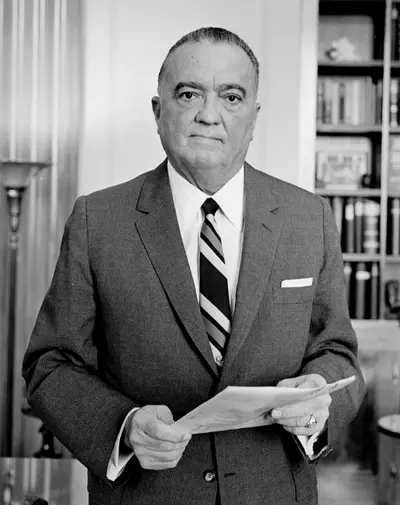
John Edgar Hoover was an American law enforcement administrator who served as the first Director of the Federal Bureau of Investigation (FBI) of the United States. He was appointed director of the Bureau of Investigation – the FBI's predecessor – in 1924 and was instrumental in founding the FBI in 1935, where he remained director for another 37 years until his death in 1972 at the age of 77. Hoover has been credited with building the FBI into a larger crime-fighting agency than it was at its inception and with instituting a number of modernizations to police technology, such as a centralized fingerprint file and forensic laboratories. Hoover is also credited with establishing and expanding a national blacklist, referred to as the FBI Index or Index List, renamed in 2001 as the Terrorist Screening Database which the FBI still compiles and manages.
