Jean-Paul Sartre Quotes
At that time [1954], as a result of political events, I was deeply preoccupied by my relations with the Communist Party.
Sartre, Jean-Paul. "Itinerary of a Thought." Between Existentialism and Marxism, translated by John Mathews, Pantheon Books, 1974.


Even the President was not spared during the McCarthy era. The red scare was so pervasive, that a lunatic fringe ultra right wing organization could call the President a “communist dupe” and be taken seriously be much of the media who were themselves intimidated and might be accused of being communists at any moment. It was a very low point in America’s history.

The Red Scare had already reached most conservatives and Truman and most others had not yet been affected by the fear of Communism that so many people had through the 1970s.


Reacting to the disarray of the federal government as a result of the activities of Senator Joseph R. McCarthy:


In addition to the men who feared communism so much that they ignored the then greater menace of Fascism, there was also a small but influential pro Fascist influence in England which included the King who was forced to abdicate as The Duke of Windsor.


He was a virulent anti communist and an opponent and foe of Chiang Kai-shek who he regarded as too moderate.


Although the U. S. denied propaganda and dirty tricks efforts interfering in the internal affairs of South American Countries, this memo proves that there were some instances of just that.

This editorial marked what most people agreed was the end of the Cold War.


He served as a liaison with the Russian military officers after WWII. As a result he developed friendships with some who told him much about Stalin and the Communist party of the Soviet Union.
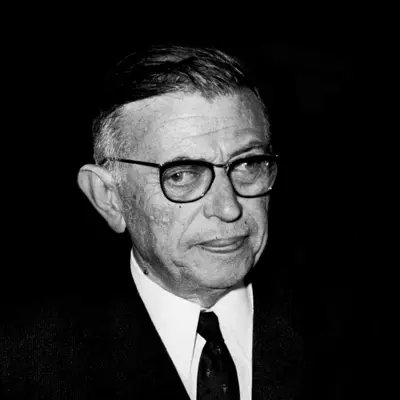
Jean-Paul Charles Aymard Sartre was a French philosopher, playwright, novelist, screenwriter, political activist, biographer, and literary critic. He was one of the key figures in the philosophy of existentialism and phenomenology, and one of the leading figures in 20th-century French philosophy and Marxism. His work has also influenced sociology, critical theory, post-colonial theory, and literary studies, and continues to influence these disciplines.
