William Berkeley Quotes
Our ministers are well paid, and by my consent should be better if they would pray oftener and preach less.
Protestant ministers were employees of the state. It is with this background that the First Amendment was created and ratified.
William Berkeley, 1606-1677, Colonial Governor of Virginia, Report to the Commissioners of Plantations, 1671
Sourced by: Eigen's Political and Historical Quotations


New York State was so concerned about the separation of church and state that they would not allow any religious cleric or official, to serve in any position of the state militia or government. Delaware had earlier placed the same prohibition against clerics serving in any branch of the government. See {621428} The Bill of Rights did not go that far, but there are a few religions that also support this notion. Perhaps the most dramatic example was Pope John Paul’s prohibition of Priests running for elective office.

The Supreme Court had ruled school prayer illegal. Many religious people were distressed and turned to the President:


Justinian, like many civil political leaders before and after him, took great pains to minimize the civil authority of the church. Separation of church and state is not a modern notion, though it was harder to accomplish in antiquity. Rulers would want to coopt the religion to help legitimize their rule, but tried to keep the church as weak as they could unless another religion was challenging for supremecy.


At the beginning of our nation, before there was a Constitution, the state of Virginia prohibited clergy from serving in the state legislature.

This quotation, 500 years later, would be used by American anti-Catholics to justify their antipathy to the Catholic Church. This was about a most undemocratic statement about the common man and his capabilities which was completely counter to the American view. The fact that it was 500 years past or that many American Catholics did not believe it or that even if they did, it was restricted to matters of theological faith, was not considered by the Know-Nothings and others.
Commenting on the Supreme Court's ban on public school prayer:


The King assumed the role of head of the Church of England.

The Roman Catholic Clergy as well as the Vatican was quite corrupt in Luther’s time which was one of the reasons for his reform effort. Throughout history some clerics have abused their positions and roles and acted as impediments to the faith in their own religions.

While he did not believe that clerics should engage in politics, he did believe that Islamic values and law should be embodied in the nation’s constitution and laws.

Philip II, by this statement, and his subsequent behavior, made a major step forward in France for the separation of church and state. Previously, French kings played a major part in the selection of the bishops and other high clerics of the realm. Phillip ceased that type of interference. He did however, close down a religious commune for misbehavior, but that was at the request of both the church and civil authorities. See {617074} . The religious authorities at the time were delighted with this form of separation of church and state, but they were adamant that their church should be able to influence the monarchy and laws of the realm. In contrast today, the Chinese government does not allow any religion to interfere with the operation of the government, but insists that the Dali Lama and the Bishops of the Catholic church can only be appointed with their approval. Separation of church and state is a two way phenomenon.

For those who doubt that there was intended a rigid separation between church and state, they have but to contemplate this passage. However, at about the same time, the State of South Carolina moved in its constitution in an opposite direction. See {612573}. When the framers of the Constitution met in 1787 in Philadelphia the separation of church and state issue was not really resolved and awaited the Bill of Rights where the separatists won out.

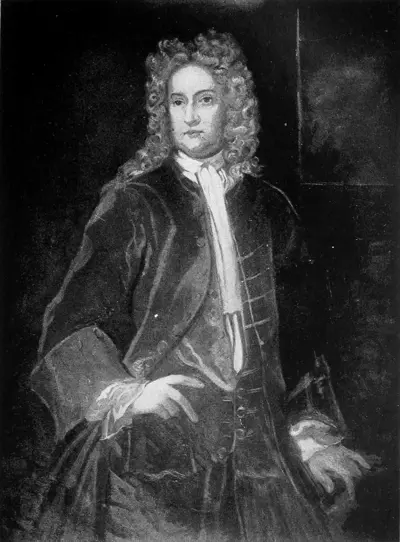
Sir William Berkeley was a colonial governor of Virginia, and one of the Lords Proprietors of the Colony of Carolina; he was appointed to these posts by King Charles I, of whom he was a favourite.
