Alice Morse Earle Quotes
One of the earliest institutions in every New England community was a pair of stocks. The first public building was a meeting-house, but often before any house of God was builded, the devil got his restraining engine.
Earle, Alice Morse. Curious Punishments of Bygone Days. Herbert S. Stone & Company, 1896, p. 29.


In the war year of 1813 all costal fishing and maritime trading was prohibited by the Madison administration, to eliminate contraband trade:

47 laws were promulgated. Most had a maritime justice tradition. They are often referred to as the "Laws of Oleron."


This method of substance abuse prevention represents what scientists now call “environmental prevention” where instead of dealing with individual alcoholics the environment is altered to reduce the likelihood of developing fewer alcohol-related problems. Almost every state uses Locke’s principle and regulates the number of liquor outlets in any most areas. Those communities which have a very high density of bars and liquor stores tend to have more alcohol-related violence. The riots of the Watts area of Los Angeles in the late 20th century took place in one of the highest densities of liguor stores in the country.

The major targets of this law were the Puritans who would not attend the normal Church of England services but had their own, usually in a private home.

While only certain kinds of songs were prohibited, all dancing was. This prohibition exists to this day in some Protestant sects.

Several years before the Battle of Bunker Hill, revolutionary activity had already broken out in the American colonies—See {634132} for an example. This law gave the British authorities much more “clout” in dealing with the “seditious” American activities. It protected English law enforcement officials from being tried in local Colonial courts for murder or assault in putting down insurrections. George Washington and other Patriots were outraged over this law. See {634131}.


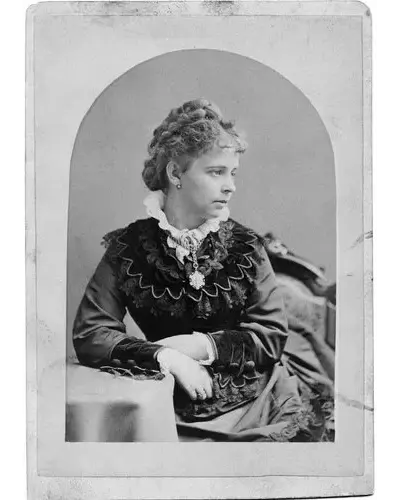
Alice Morse Earle was an American historian and author from Worcester, Massachusetts. She was christened Mary Alice by her parents Edwin Morse and Abby Mason Clary. On 15 April 1874, she married Henry Earle of New York City, changing her name from Mary Alice Morse to Alice Morse Earle. Her writings, beginning in 1890, focused on small sociological details rather than grand details, and thus are invaluable for modern social historians. She wrote a number of books on colonial America (and especially the New England region) such as Curious Punishments of Bygone Days.
