Robert Peel Quotes
On the Wednesday evening - that is, the day I saw her Majesty on this particular point - I had the opportunity of conferring with all those whom I proposed to submit to her Majesty as Ministers.
Peel, Robert. "Ministerial Explanations." Hansard's Parliamentary Debates, 3rd series, vol. 47, T.C. Hansard, 13 May 1839, col. 981.


At that time the king not only called Parliament into session but terminated the session and set the agenda. In this case, Charles I didn't want royal activities regarding taxation to be debated much less legislated upon. As the speaker rose to leave the chair, he was forcibly held in place by two members as the house voted by acclamation to condemn the taxes and even the merchants who paid them. This was perhaps the first legislative tax revolt in history.

His immediate frustration was the title form of address first selected by Congress for the President. See {586767}


The message was actually a threat in effect telling Parliament that if it did not pass the correct appropriations, the king might supplant them. He dissolved Parliament later that year. Note that the partisanship of the times was principally between the king and the parliament.


Publicly warning Louis Napoleon against his adventure in Mexico:


The king's son, Prince Albert had dropped some papers and was instructed by the king to pick them up himself rather than allow the servants to do it.

The issues of check and balances in the American constitution were radical by world standards of the day. However, it was by no means an new concept and as this quotation illustrates was discussed and debated in England, but although England was far ahead of almost all other countries with respect to eliminating absolute power, they never took it as far as the Americans did. That took a revolution.


Actually, Queen Elisabeth II, at that time the Queen of England, was very sophisticated about the policies of the nation. Chomsky’s point was not that the Queen was ignorant; it was that her role is ceremonial and it is not critical or even material that the monarch in a Constitutional Democracy understands or approves of the government program that is being presented.


When Henry came to “George II” he was interrupted by the Speaker, John Robinson, who shouted “Treason!” Henry had been railing against the Stamp Act.
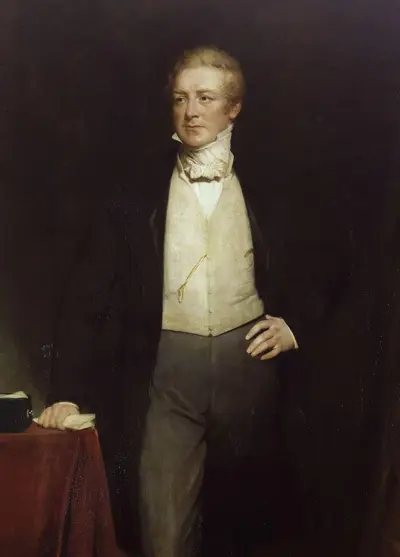
Sir Robert Peel, 2nd Baronet, FRS was twice Prime Minister of the United Kingdom (1834–1835 and 1841–1846) and twice Home Secretary (1822–1827 and 1828–1830). He is regarded as the father of modern British policing, owing to his founding of the Metropolitan Police Service. Peel was one of the founders of the modern Conservative Party.
