Jesse Holman Jones Quotes
There was no one at the table [of a Cabinet meeting] who could be of help to me except the President, and when I needed to consult him I did not choose a Cabinet meeting to do so.
Jesse Holman Jones, 1874-1956, Chairman, Reconstruction Finance Corporation, U. S. Secretary of Commerce (Democrat), Referring to Franklin D. Roosevelt, Quoted in New York Times, May 28, 1989
Sourced by: Eigen's Political and Historical Quotations


See {626594} for Polk’s negative view of delegation of any authority or responsibility.


A decision George F. Kennan had advocted had backfired and the administration was being castigated in the press. Kennan apologized to the Secretary of State. The only soldier ever so honored


Attacking FDR by pandering to anti-Semites and falsely claiming that a Jewish financier, Bernard Baruch ran the government: The Priest was the right wing demagogic radio host of his day. Virulently anti-Semitic and anti-Black, he was threatened with excommunication by the Catholic Church, which finally ordered him to cease us weekly radio show and stop the political hate.


He supported the Presidential concept as the least worst option.

Alberto Gonzalez, White House Counsel and later Attorney General who was forced to resign and David S. Addington, Counsel to the Vice President, had come up with a novel view of the powers of the presidency. They argued that since the President is the Commander in Chief, in a war situation or intelligence gathering thereto, has the Constitutional responsibility for that function, he need not obey any laws of Congress as in the conduct of the war Congress would be impinging on the Constitutional separation of powers which itself was prohibited by the Constitution. The argument did not find any significant legal support but for a while the George W. Bush White House behaved as if this were the law, despite the fact that even in the American Revolution and the War of 1812 Congress passed laws regulating the conduct of the armed forces as is provided for in other parts of the Constitution. Yet even Goldsmith would allow the President some powers that many think are unconstitutional and/or belong to Congress. See {32436}.

Dodd observed that FDR expanded the power of the Presidency to deal with the emergency of the Great Depression, and like most Americans hoped that these measures would succeed. The Supreme Court limited some of the power expansion to the Executive Branch, but was the start of the huge Presidential power expansion that would continue through the Cold War and the War on Terror by Presidents of both parties.


Bush assumes that this meant that all the people agreed with his decision to invade Iraq. While that might have been the case, there are other possibilities that many historians, journalists and other analysts have suggested. The Vice President, and his personal staff, were known to have visited them all and lobbied for the invasion. They pressured several of them who may have not wanted to run afoul of what seemed to be the most powerful vice president in American History. Or they may have thought that the decision had already been made, and it was time to join together and loyally support the policy decision that had been made. There were few strong independent thinkers in the top tier as Bush was not intellectually or emotionally inclined to have open staff arguments to work out a policy or very strong advisors with different points of view. The strongest of the advisors like Secretary of State Colin Powell had been lied to and persuaded there was “clear evidence” that Iraq was about to deploy a nuclear weapon. This made Powell an advocate. The intelligence given to Powell and the others was wrong and much was fabricated or obtained from an unreliable source who had been pushed as trustworthy by the Vice President. The CIA Director, had told those all that the evidence and case for the fact that Iraq was developing and close to deploying a nuclear weapon was a “slam dunk”.


_0_PostageStamp_47x47.jpg "Chairman of the Joint Chiefs of Staff Navy Adm. Mike Mullen gives an interview to John Dickerson during the CBS news program Face the Nation in Washington, D.C., July 5, 2009. During the interview, Mullen discussed the wars in Iraq and Afghanistan, North Korea's recent missile tests and his recent visit to Russia. (DoD photo by Mass Communication Specialist 1st Class Chad J. McNeeley, U.S. Navy/Released)")


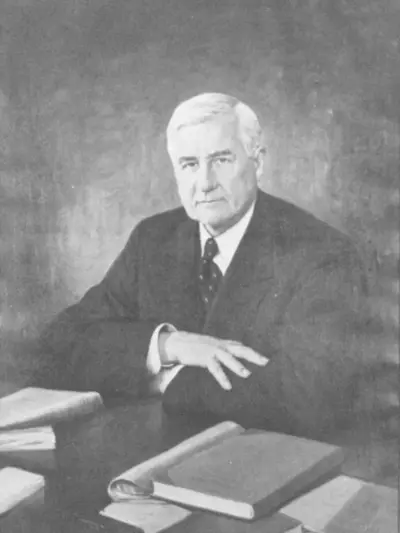
Jesse Holman Jones was an American Democratic politician and entrepreneur from Houston, Texas. Jones managed a Tennessee tobacco factory at age fourteen, and at nineteen, he was put in charge of his uncle's lumberyards. Five years later, after his uncle, M. T. Jones, died, Jones moved to Houston to manage his uncle's estate and opened a lumberyard company, which grew quickly. During this period, Jesse opened his own business, the South Texas Lumber Company. He also began to expand into real estate, commercial building, and banking. His commercial building activities in Houston included mid-rise and skyscraper office buildings, hotels and apartments, and movie theaters. He constructed the Foster Building, home to the Houston Chronicle, in exchange for a fifty percent share in the newspaper, of which he acquired control in 1926.
