Pierce Butler Quotes
A unity of the Executive would be necessary in order to promote dispatch; -that a plurality of Persons would never do. When I was in Holland the States general were obliged to give up their power to a French Man to direct their military operations…. However power is always increasing on the part of the Executive
He supported the Presidential concept as the least worst option.
Pierce Butler, 1744-1822, Delegate to Constitutional Convention (SC), Debate, Constitutional Convention 1787, Quoted in the notes of Georgia Delegate William Leigh Pierce, ~1740-1789
Sourced by: Eigen's Political and Historical Quotations


See {626594} for Polk’s negative view of delegation of any authority or responsibility.


Dickinson was one of those who argued for a very weak executive (President)


Alberto Gonzalez, White House Counsel and later Attorney General who was forced to resign and David S. Addington, Counsel to the Vice President, had come up with a novel view of the powers of the presidency. They argued that since the President is the Commander in Chief, in a war situation or intelligence gathering thereto, has the Constitutional responsibility for that function, he need not obey any laws of Congress as in the conduct of the war Congress would be impinging on the Constitutional separation of powers which itself was prohibited by the Constitution. The argument did not find any significant legal support but for a while the George W. Bush White House behaved as if this were the law, despite the fact that even in the American Revolution and the War of 1812 Congress passed laws regulating the conduct of the armed forces as is provided for in other parts of the Constitution. Yet even Goldsmith would allow the President some powers that many think are unconstitutional and/or belong to Congress. See {32436}.


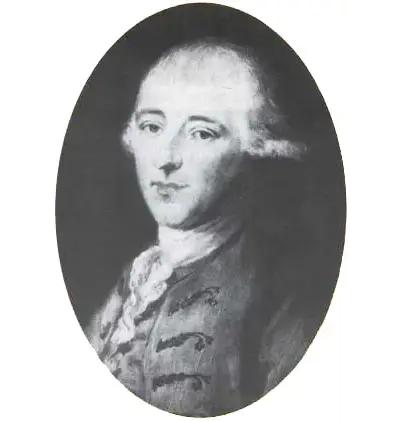
Pierce Butler was an Irish-American South Carolina rice planter, slaveholder, politician, an officer in the Revolutionary War, and one of the Founding Fathers of the United States. He served as a state legislator, a member of the Congress of the Confederation, a delegate to the 1787 Constitutional Convention, and a member of the United States Senate.
