John Dickinson Quotes
Republics are in the beginning and for a time industrious, but they finally destroy themselves because they are badly constituted. I dread the consolidation of the States and hope for a good national Government from the present Division of the States with a feeble Executive.
Dickinson was one of those who argued for a very weak executive (President)
John Dickinson, 1732-1808, Member of the Continental Congress, Delaware Delegate to the Constitutional Convention, Debate, Constitutional Convention, Philadelphia, 1787, Quoted in the Notes of Rufus King
Sourced by: Eigen's Political and Historical Quotations


Randolph was one of the delegates who opposed a Presidency of a single man.


Opposing electronic town meetings and referendums:


This letter was written shortly after the Constitution had been signed by the convention delegates. This difference between Adams and Jefferson would be at the heart of the first great partisan struggle in American history. Adams, as the second President, tried to increase and use the power of the Presidency. Jefferson opposed him, especially when Adams tried to run for a second term. The Adams-led Federalists were pitted against Jefferson’s Democratic Republicans in the first, and perhaps still the most bitter partisan struggle in American political history. The Jeffersonians accused Adams and the Federalists of trying to unravel the American Revolution and revert to a monarchy. The people not only sided with the Democratic Republicans, ousting Adams, but also turned out most of the Federalists. It was the end of the Federalist Party, and a new conservative party—without monarchial tendencies—the Whigs became the new opposition party.

Anthony Ashley Cooper


Ironically, many Republican leaders give lip service to decentralized government but they fight hard for centralized national government making. Many want Congress to make laws governing abortion and other family planning techniques. Some want the state to decide, but almost no Republicans want to leave these personal decisions to the local government much less the family and women involved. In business regulation as well, republican fight tooth and nail to have Federal legislation prempt state and local government about tort liability for defective products, and they always prefer that the Federal SEC make all the rules and regulations about selling stocks and bonds and do not want state or local government to “interfere”. Likewise, they have emasculated the state governments when it comes to authority over the state militias where virtually all the controls and promotions are decided by Congress and the Department of Defense and not by Governors or local politicians. Ther are many other examples. In most of the solid Republican Southern States, the local school boards cannot even select the textbooks that schools will use and the Republicans centralize this with the State government and state legislatures which they control. Democrats also are generally opposed to decentralization except for large cities having control along with the Federal government but otherwise they too do not want decentralization. For national political parties, what is the point of winning national elections of the big decisions are made locally?


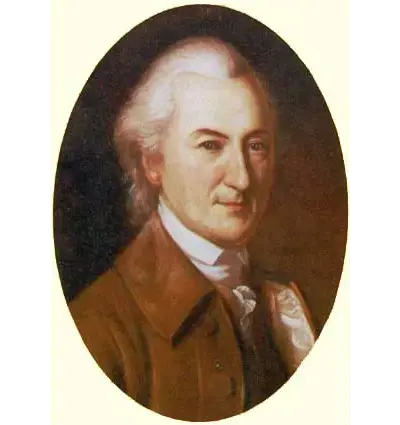
John Dickinson, a Founding Father of the United States, was a solicitor and politician from Philadelphia, Pennsylvania, and Wilmington, Delaware, known as the "Penman of the Revolution" for his twelve Letters from a Farmer in Pennsylvania, published individually in 1767 and 1768. As a member of the First Continental Congress, where he was a signee to the Continental Association, Dickinson drafted most of the 1774 Petition to the King, and then, as a member of the Second Continental Congress, wrote the 1775 Olive Branch Petition. When these two attempts to negotiate with King George III of Great Britain failed, Dickinson reworked Thomas Jefferson's language and wrote the final draft of the 1775 Declaration of the Causes and Necessity of Taking Up Arms. When Congress then decided to seek independence from Great Britain, Dickinson served on the committee that wrote the Model Treaty, and then wrote the first draft of the 1776–1777 Articles of Confederation and Perpetual Union.
