Marquis de Lafayette Quotes
It is foolishly thought by some that democratical constitutions will not, cannot, last; that the States will quarrel with each other; that a king, or at least a nobility, are indispensable for the prosperity of a nation.
Lafayette, Marie Joseph Paul Yves Roch Gilbert Du Motier. Memoirs, Correspondence and Manuscripts of General Lafayette. Vol. 2, Saunders and Otley, 1837.


Many of the early democracies had failed when in crises the citizens turned to a strong leader who soon became a monarch. The early democracies did not have the mature democratic institutions that we now know are so important for the success of a democracy.


Commenting on the concept of democracy and it's lack of Biblical justification:

This letter was written shortly after the Constitution had been signed by the convention delegates. This difference between Adams and Jefferson would be at the heart of the first great partisan struggle in American history. Adams, as the second President, tried to increase and use the power of the Presidency. Jefferson opposed him, especially when Adams tried to run for a second term. The Adams-led Federalists were pitted against Jefferson’s Democratic Republicans in the first, and perhaps still the most bitter partisan struggle in American political history. The Jeffersonians accused Adams and the Federalists of trying to unravel the American Revolution and revert to a monarchy. The people not only sided with the Democratic Republicans, ousting Adams, but also turned out most of the Federalists. It was the end of the Federalist Party, and a new conservative party—without monarchial tendencies—the Whigs became the new opposition party.


As a member of the electoral college, he refused to vote for Richard M. Nixon who had won the North Carolina vote. Extremist fundamentalists often oppose democracy in favor of republicanism. A major distinction for them is in the republic, there is not direct


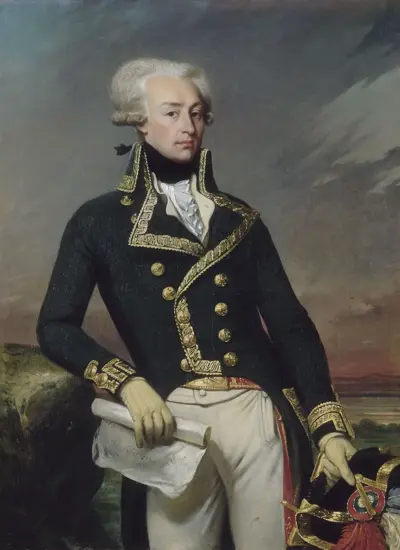
Marie-Joseph Paul Yves Roch Gilbert du Motier, Marquis de La Fayette, known in the United States as Lafayette (/ˌlɑːfiːˈɛt, ˌlæf-/, French: [lafajɛt]), was a French aristocrat and military officer who fought in the American Revolutionary War, commanding American troops in several battles, including the siege of Yorktown. After returning to France, he was a key figure in the French Revolution of 1789 and the July Revolution of 1830. He has been considered a national hero in both countries.
