Marquis de Lafayette Quotes
No person is more convinced than I am of the necessity of giving great splendour and energy to the great hereditary magistracy exercised by the king; but in a free country, there can only be citizens and public officers.
Lafayette, Marie Joseph Paul Yves Roch Gilbert Du Motier. Memoirs, Correspondence and Manuscripts of General Lafayette. Vol. 3, Saunders and Otley, 1837.

In 1628 Parliament, in response to abuses by King Charles I, was about to pass The Petition of Rights–-a type of Bill of Rights. The King gave assurances that the practices—such as forcing nobles to lend him money—would not continue and didn't want to be embarrassed by passage of a law which he claimed would indicate that the Parliament did not trust him and weaken the dignity of the monarchy. The Petition of Rights passed with Cole’s leadership.


Commenting on the concept of democracy and it's lack of Biblical justification:


Publicly warning Louis Napoleon against his adventure in Mexico:

The issues of check and balances in the American constitution were radical by world standards of the day. However, it was by no means an new concept and as this quotation illustrates was discussed and debated in England, but although England was far ahead of almost all other countries with respect to eliminating absolute power, they never took it as far as the Americans did. That took a revolution.
This Cahier was the consensus of the Clergy of Blois in 1789. There were cahiers of several provinces of France—some by the clergy, some by the nobles. What is fascinating is the emergence of many of the pre-revolutionary French concepts. The example of the American revolution and its principles was known throughout the educated classes of France.
Many of the early democracies had failed when in crises the citizens turned to a strong leader who soon became a monarch. The early democracies did not have the mature democratic institutions that we now know are so important for the success of a democracy.

While he thought a people had a right to have a king, he also made radical statements regarding the British and their monarchy. See {633999}. The right of a people to have a king was also stated by the President of Harvard in that period— {633996}.

Huey P. Long credited this quotation for the origin of his famous slogan, "Every Man a King, but No Man Wears a Crown”. See {609936}


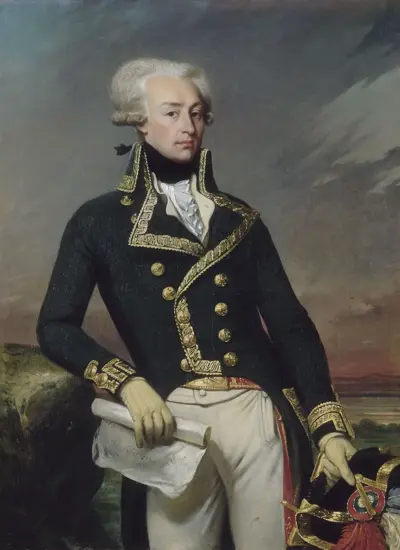
Marie-Joseph Paul Yves Roch Gilbert du Motier, Marquis de La Fayette, known in the United States as Lafayette (/ˌlɑːfiːˈɛt, ˌlæf-/, French: [lafajɛt]), was a French aristocrat and military officer who fought in the American Revolutionary War, commanding American troops in several battles, including the siege of Yorktown. After returning to France, he was a key figure in the French Revolution of 1789 and the July Revolution of 1830. He has been considered a national hero in both countries.
