Sheikh Mohammad Abdullah Quotes
We are convinced that the institution of monarchy is incompatible with the spirit and needs of modern times which demand an egalitarian relationship between one citizen and another
Sheikh Mohammad Abdullah, *-1982, Chief Minister of Kashmir, Leader of the National Conference Party, Speech to the Constituent Assembly
Sourced by: Eigen's Political and Historical Quotations


Huey P. Long credited this quotation for the origin of his famous slogan, "Every Man a King, but No Man Wears a Crown”. See {609936}


This was the first contact between the colonists and the French government. The French agent was very non committal and the parties were just feeling each other out. Franklin made it perfectly clear that the colonists would not trade the English King for a French one and become part of the French empire.


While this was a type of “Equal Rights Amendment”, It emphasized dignity rather than operations. For example, adultery was made a crime if committed by a woman (not for a man), And women could be dismissed from a job, simply because they were pregnant. And unusual aspect of this quotation is the fact that it applies to equality of dignity of Social status. In America we have this as an unwritten concept of fairness and egalitarianism, but it is not followed very much and certainly not guaranteed by our Constitution.

The absurdity was that Adolf Hitler had more unilateral power and authority than and king did in the 20th century.

First female presidential candidate & first divorcee to run for that office. The half to which she was referring were the females, who by many narrow laws were unable to participate in the intellectual and political life of the country. At the time, women could not even vote.
While he thought a people had a right to have a king, he also made radical statements regarding the British and their monarchy. See {633999}. The right of a people to have a king was also stated by the President of Harvard in that period— {633996}.

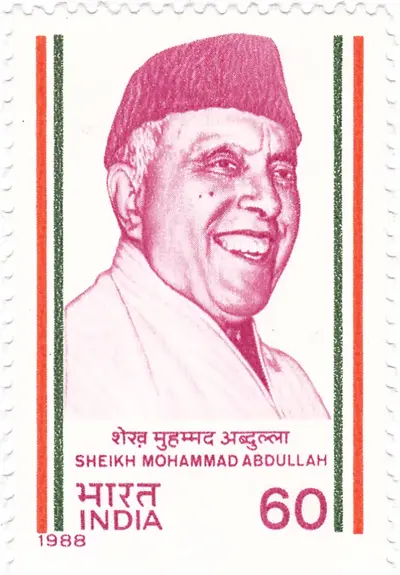
Sheikh Mohammad Abdullah was an Indian politician who played a central role in the politics of Jammu and Kashmir. Referred as "Sher-e-Kashmir" (Lion of Kashmir), Abdullah was the founding leader of the All Jammu and Kashmir Muslim Conference (later renamed Jammu and Kashmir National Conference) and the 1st elected Prime Minister of Jammu and Kashmir after its accession to India. He agitated against the rule of the Maharaja Hari Singh and urged self-rule for Kashmir.
