Hermann Goering Quotes
There is no place for kings in the new European order
The absurdity was that Adolf Hitler had more unilateral power and authority than and king did in the 20th century.
Hermann Goering, 1893-1946, Nazi Field Marshall, President of the German Reichstag, Statement to a Bulgarian Journalist about Bulgarian King Boris III
Sourced by: Eigen's Political and Historical Quotations


In 1848 a number of revolutions flared throughout Europe with a call for democracy rather than monarchy. The Prussian king was one of those who really believed that he was selected by God to rule, was very frightened and tried to enlist the Queen and England to present a united front against the revolutionaries. England, which had already had a strong functioning parliament and extensive voting suffrage, protected most of the rights of its citizens and was a Constitutional Monarchy where there were limits to the power of the monarch. Further, Victoria was extremely popular and in many ways was far ahead of the electorate in terms of modern democratic reforms. So she was not in the panic of many of the other crowned heads of Europe were in. Somewhat following the example of England, King William IV allowed a parliament and minimized the strong military role that characterized Prussia. Most of the 1848 revolutions failed to sieze governments but, as with Prussia, forced reforms in what was a long movement to European democracy that would take another 150 years. Note also the logic about religion. Since the revolutionists did not believe in the divine right of kings, they opposed God’s will on earth. Therefore, they opposed God and must be atheists. Almost all counter revolutionary accusations included the claim—often not true—that the revolutionaries were atheists.


This was the first contact between the colonists and the French government. The French agent was very non committal and the parties were just feeling each other out. Franklin made it perfectly clear that the colonists would not trade the English King for a French one and become part of the French empire.


The Monarchy was chosen and Darius was monarch. See {612225}


When ambassador to Great Britain, he was very supportive of the British Fascists, and was an admirer of Adolf Hitler. Once war with Germany was commenced, Kennedy predicted that England would lose the war and became a fascist puppet state controlled by Germany. He opposed Lend Lease and the other efforts of the Roosevelt administration to assist England to fight off the Germans. Ironically his oldest son died in a dangerous volunteermission fighting Germany in the War. Kennedy's earlier pro-German views ended his political career and was an embarassment to his sons when they entered politics.

General Prim was commenting on the shift in popular support in Spain from a monarchy to a republic.


This Cahier was the consensus of the Clergy of Blois in 1789. There were cahiers of several provinces of France—some by the clergy, some by the nobles. What is fascinating is the emergence of many of the pre-revolutionary French concepts. The example of the American revolution and its principles was known throughout the educated classes of France.

This was the group that decided who was to be executed in the Reign of Terror
While he thought a people had a right to have a king, he also made radical statements regarding the British and their monarchy. See {633999}. The right of a people to have a king was also stated by the President of Harvard in that period— {633996}.

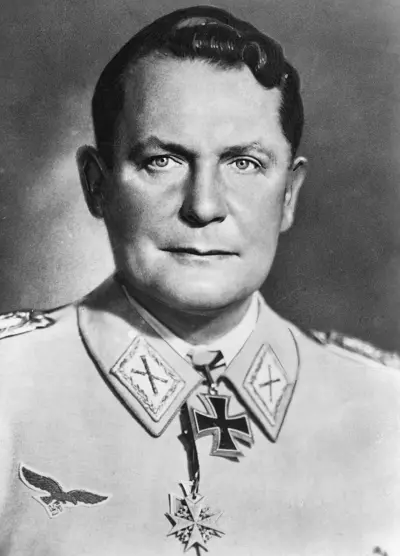
Hermann Wilhelm Göring was a German political and military leader and a convicted war criminal. He was one of the most powerful figures in the Nazi Party, which ruled Germany from 1933 to 1945.
