John Polanyi Quotes
In nation after nation, democracy has taken the place of autocracy.
Polanyi, John C. "Science, Human Rights and the Culture of Peace." UNESCO, 1999.


There are some who have argued that the United States 20th century of world dominance was an empire. Perhaps so, but it did not have most of the characteristics that Thucydides and most others thought of as characteristics of empire—occupation of nations, rule by the Imperial country, privilege in other nations of the Empire, control. Most important, in historical empires, money—in the form of taxes or goods was commandeered by the Empire for the mother country. The US taxed no one, and money flowed the other way in the most generous sharing of foreign aid in human history. The United States had great influence and was able to exert economic and sometimes military pressure on many nations of the world; American culture was adopted by many nations, but America rarely behaved as Empires historically did.

While this has been one of the great American principles of political philosophy, in reality we have on many occasions interfered when a people chose an enemy of the United States or made a choice of a government which would seize power and not allow any further free choices. However, from the time JFK made this statement to today, our foreign policy record has become much better on implementing this principle.

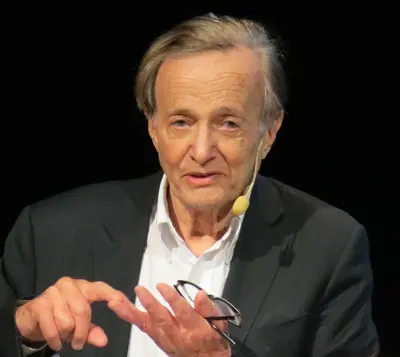
John Charles Polanyi, PC CC FRSC OOnt FRS is a Hungarian-Canadian chemist who won the 1986 Nobel Prize in Chemistry, for his research in chemical kinetics. Polanyi was born in Berlin, Germany prior to his family emigrating in 1933 to the United Kingdom where he was subsequently educated at the University of Manchester, and did postdoctoral research at the National Research Council in Canada and Princeton University in New Jersey. Polanyi's first academic appointment was at the University of Toronto, and he remains there as of 2019. In addition to the Nobel Prize, Polanyi has received numerous other awards, including 33 honorary degrees, the Wolf Prize in Chemistry and the Gerhard Herzberg Canada Gold Medal for Science and Engineering. Outside his scientific pursuits, Polanyi is active in public policy discussion, especially concerning science and nuclear weapons. His father, Mihály (Michael), was a noted chemist and philosopher. His uncle Karl was an economist. According to György Marx he was one of "The Martians", a group of prominent Hungarian scientists who emigrated to the United States in the first half of the 20th century.
