Simon Bolivar Quotes
Federalism, though it may be the most perfect [system] and the most capable of bringing happiness to human society, is nevertheless the most detrimental to the interests of our infant countries. Generally speaking our citizens are not yet able to exercise their rights fully and for themselves, because they lack the political virtues that charecterise true republics
Simon Bolivar 1783-1830, South American Colonial Liberator, President of Venezuela and Columbia, Cartegena Manifesto 1810, Quoted in Robert Harvey, Liberators
Sourced by: Eigen's Political and Historical Quotations


The words “extensive empire” imply that Jefferson who doubled the size of the United States with the Louisiana Purchase was thinking of a nation that spanned the continent and was happy with the fact that the Constitution did not obstruct the addition of additional states and territories.

Early in his career, Santa Anna was an enthusiast for democracy. However, the republican form of government did not work at the time in Mexico and he developed into a despot and dictator.

The government relationship to people phrase, although probably Lincoln's most famous, was not totally original. John Adams came close in a 1774 proclamation. As did John Marshall in his McCulloch v. Maryland decision. Daniel Webster's Speech on Foot's Resolution was very close. as was Theodore Parker in 1850 {629578}. There was also Thomas Cooper in 1795. But the earliest appears to be John Wycliffe in 1382 {567292}. It is not known with which of these Lincoln was familiar.


The Spanish colonization had been so exploitative that there was little of no infrastructure established in the Spanish colonies. Almost no institutions, no local government, existed, and there was no system of law or tolerance of minority views. Power controlled all and the Spanish (and Portuguese) were the power. When they were defeated, it was a bitter free for all in most cases unless there was a strong man and even they did not last long.


Opposing electronic town meetings and referendums:
Jefferson and a number of other Founding Fathers were so against aristocracy and monarchy that the assumed that the only way to prevent it was to have all government officials subjected to annual elections. Jefferson was not at the constitutional convention, while annual elections were considered, the compromise that became the Constitution required 2 year elections for the House and 6 years for the Senate with 4 years for the Presidency.

At the start of the state of Israel, he wanted a written Constitution. However the first 60 person Knesset failed to agree upon enough to generate one. Nimerous attempts have been made, but there are few significant constitutional positions that a majority of the fractious Israeli population can agree upon. Israel at the end of te 20th century had given up on a constitution and became a legislative and common law nation. It is perhaps the hardest nation in which to practive law in that the common law that is recognized is based on Turkish Ottoman Law, Englaish Law and Jordanian law. Each of these was controlling at times in the recent past.


At the time Democracy as a form of government meant citizens voting for their own laws—not their representatives. Today we call that “Direct Democracy” as in a New England Town Meeting.

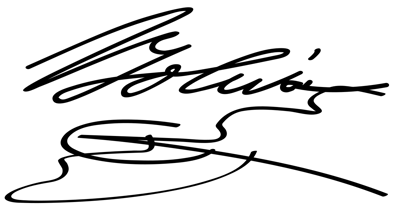
Simón José Antonio de la Santísima Trinidad Bolívar y Ponte Palacios y Blanco (Spanish: [siˈmom boˈliβaɾ] (listen), English: /ˈbɒlɪvər, -vɑːr/ BOL-iv-ər, -ar also US: /ˈboʊlɪvɑːr/ BOH-liv-ar), also colloquially as El Libertador, was a Venezuelan military and political leader who led what are currently the countries of Venezuela, Bolivia, Colombia, Ecuador, Peru, and Panama to independence from the Spanish Empire.
